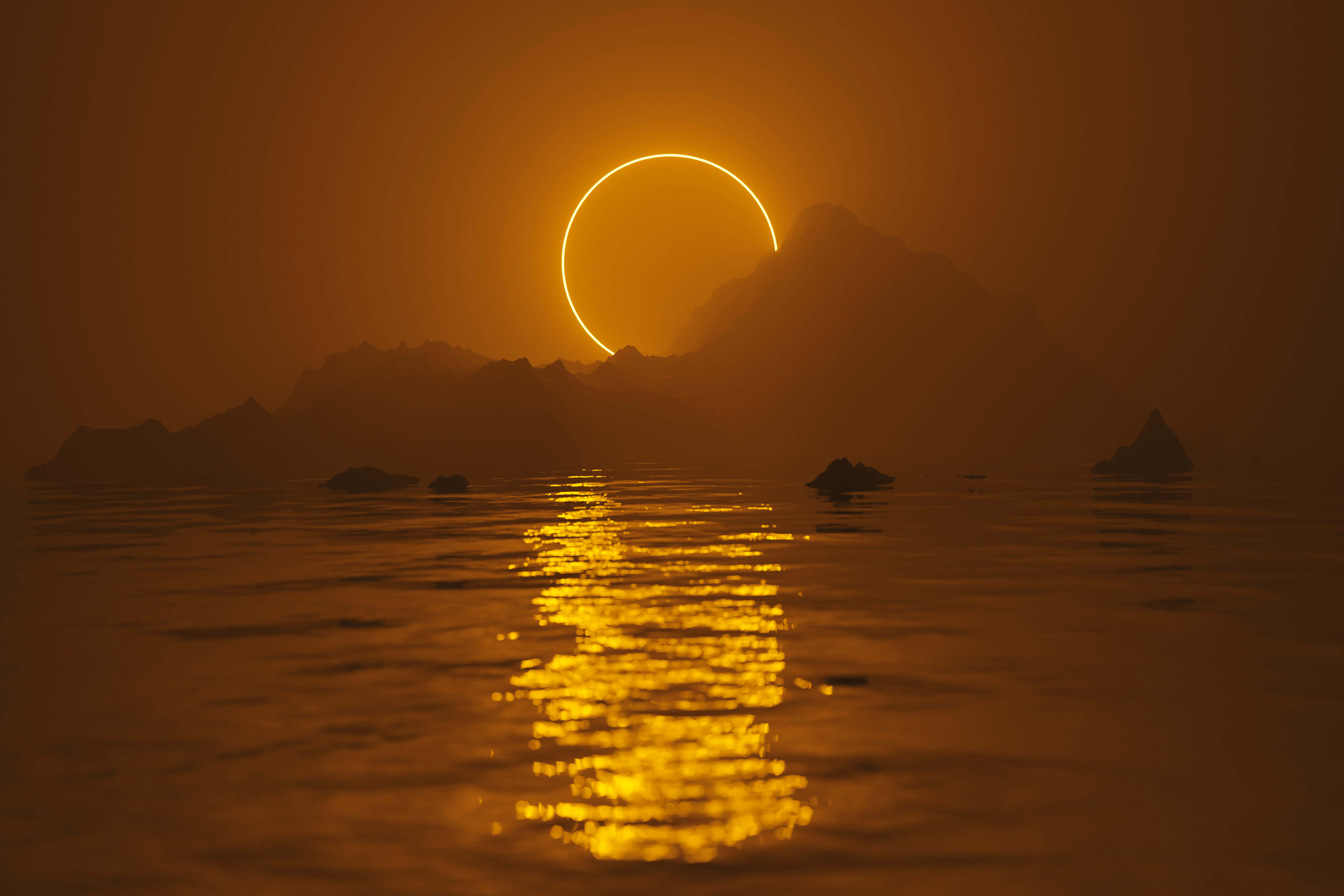
Luxury ways to experience the 2026 solar eclipse in Spain
How our Dream Trip Designer, Brianna Gordon, would create a thoughtful luxury experience around the 2026 total solar eclipse in Spain.
By Brianna Gordon, Dream Trip Designer | April 20, 2026
In August 2026, Spain will experience a solar eclipse, and it is the kind of moment that tends to attract attention quickly. People plan around it, travel for it, and organize entire trips in pursuit of a few minutes of darkness. But that is not how I think about it.
For me, the starting point is always the same. Instead of where you should go, I'd ask you how you want this to feel when it is over? Because the eclipse itself will pass quickly, and what stays with you is everything around it: the place you chose to experience it, the people joining you and the local vibes before and after.
If you are already traveling through Spain this summer, this becomes something quite special. You don’t need to reshape your entire route, but it could be the perfect opportunity to elevate a moment within it.
How I think about a rare moment
When I design journeys, I begin with context in addition to the event itself.
What are you hoping for from this experience? What kind of energy does that place carry? The eclipse simply becomes part of that.
I would not suggest chasing it across the country. But if your route already brings you near the right setting, I would absolutely shape the day around it.
These are the three settings I would naturally gravitate toward.
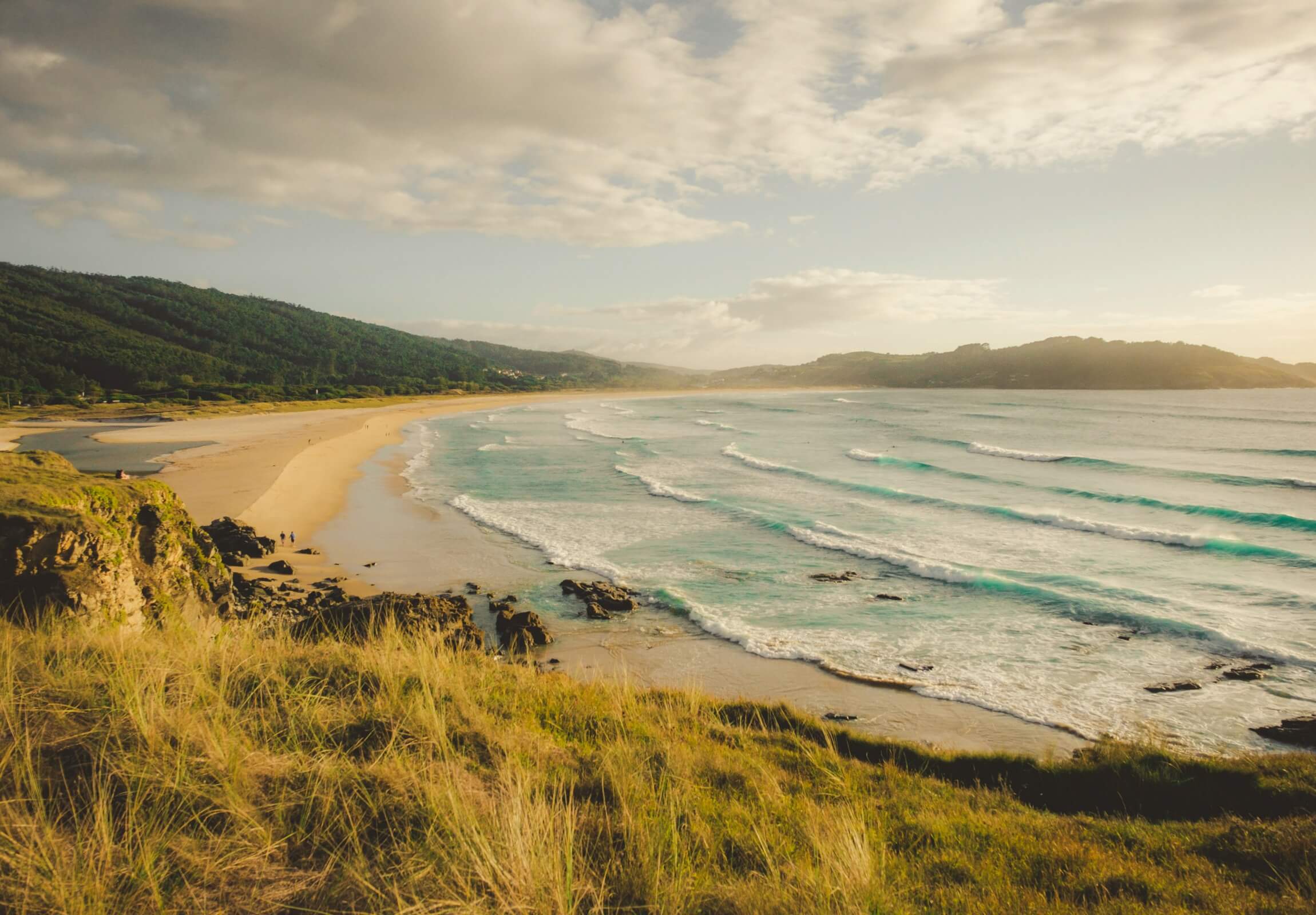
1. The northern coast, for atmosphere and space
If you are traveling through northern Spain in August (August 12th is the precise date), you are already in one of the most quietly compelling parts of the country.
Asturias, Cantabria and Basque coastline is where Spain softens. The air cools, the landscape turns green, and the horizon opens toward the Atlantic.
I like this setting for the eclipse because it is often an overlooked part of Spain, so you get to see a unique event in a location that is also a different, more off-the-beaten-path experience. I would design this as an unhurried afternoon. A long coastal lunch somewhere discreet, then a transition to a private viewpoint, away from crowds and without unnecessary structure.
If the sky is clear, the experience is striking. If it is not perfectly clear, it can become even more interesting. Light filtering through cloud layers creates something softer, more nuanced.
Afterward, I would enjoy time on a terrace overlooking the sea, a glass of something cold, and a table that invites you to linger as the local Spaniards do.
The Balearic Islands, for lightness and perspective
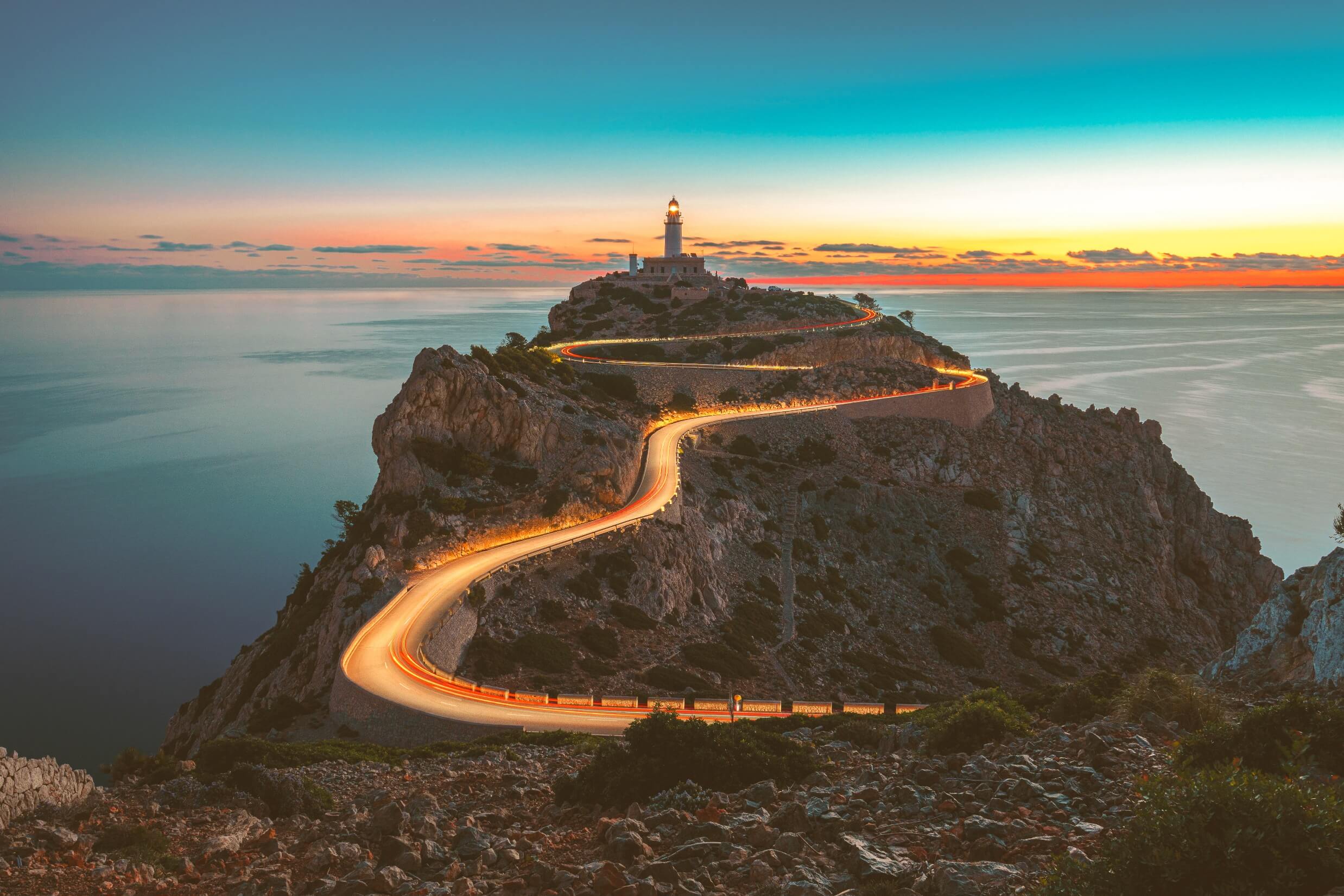
If your journey takes you toward the Balearic Islands, whether Mallorca, Menorca, or Ibiza, the experience becomes something lighter, more expansive.
Being on the islands in summer means the pace softens, the horizon opens, and everything feels just slightly more removed from the mainland. It creates a different kind of setting for the eclipse.
I like this option for travelers who want the moment to feel effortless.
I would design this around a slower morning, with time by the water, perhaps a late breakfast or a swim.
Then, I would move to a more elevated or open viewpoint in the afternoon. Somewhere quiet, with a clear line toward the horizon.
On the islands, the quality of light is already distinctive. As the eclipse approaches, that light softens further, creating a softer, more atmospheric shift.
Afterward, I would keep the evening very much in that same spirit. A long, unhurried dinner outdoors, close to the sea, where the temperature lingers and the conversation stretches.
This version feels the most relaxed. It gives you the impression of stepping slightly outside of time, even if only for a short while.
3. Andalusia, for contrast and atmosphere
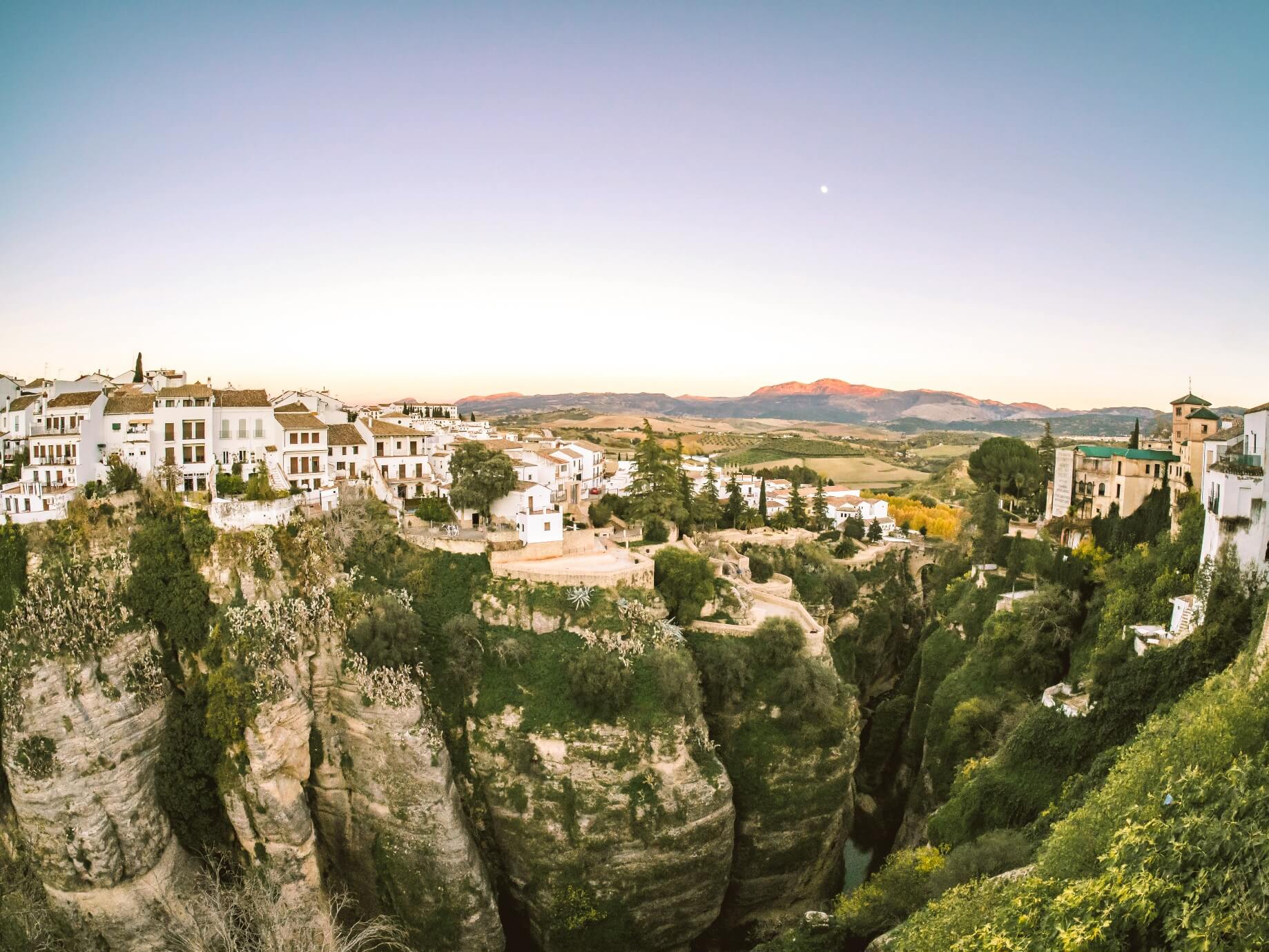
If you are in the south, the experience becomes more layered.
Andalusia is never just about one moment. There's more heat, shade, architecture, late evenings, and a sense of place that builds gradually over the course of a day.
Here, I would design around contrast.
The morning might be spent in a city like Cadiz or southern Malaga in the path of totality. Something immersive, walking through historic streets and experiencing the Andalusian culture in motion.
Then, transferring outward to a private estate, an olive grove, or a quiet elevated setting where the landscape opens just enough for the moment.
As the eclipse approaches, the light shifts against southern Spain’s textures that already hold so much character: stone, earth, and warm air.
And then, as one can expect on a summer night in Andalusia, the evening continues. A long table, a slow dinner, something that allows the moment to settle naturally into the memory of the day.
This version feels the most complete. You do more than just observing the eclipse. You get to actually live it.
Designing the day around the eclipse
What makes the difference is rarely the eclipse itself. It is how the day is shaped around it.
I pay close attention to pacing. Not overfilling the day, allowing space for anticipation without forcing it.
That might mean:
A later start to the morning
A deliberately open afternoon
A setting that invites stillness rather than movement
Comfort matters. Shade (especially in southern Spain!), seating, thoughtful hosting, and someone present who understands both the science and when to step back from it.
Luxury in this context, doesn't mean adding more but rather removing what does not belong.
A journey that holds the moment
If I were shaping a journey around this time of year, I would not build it around the eclipse alone.
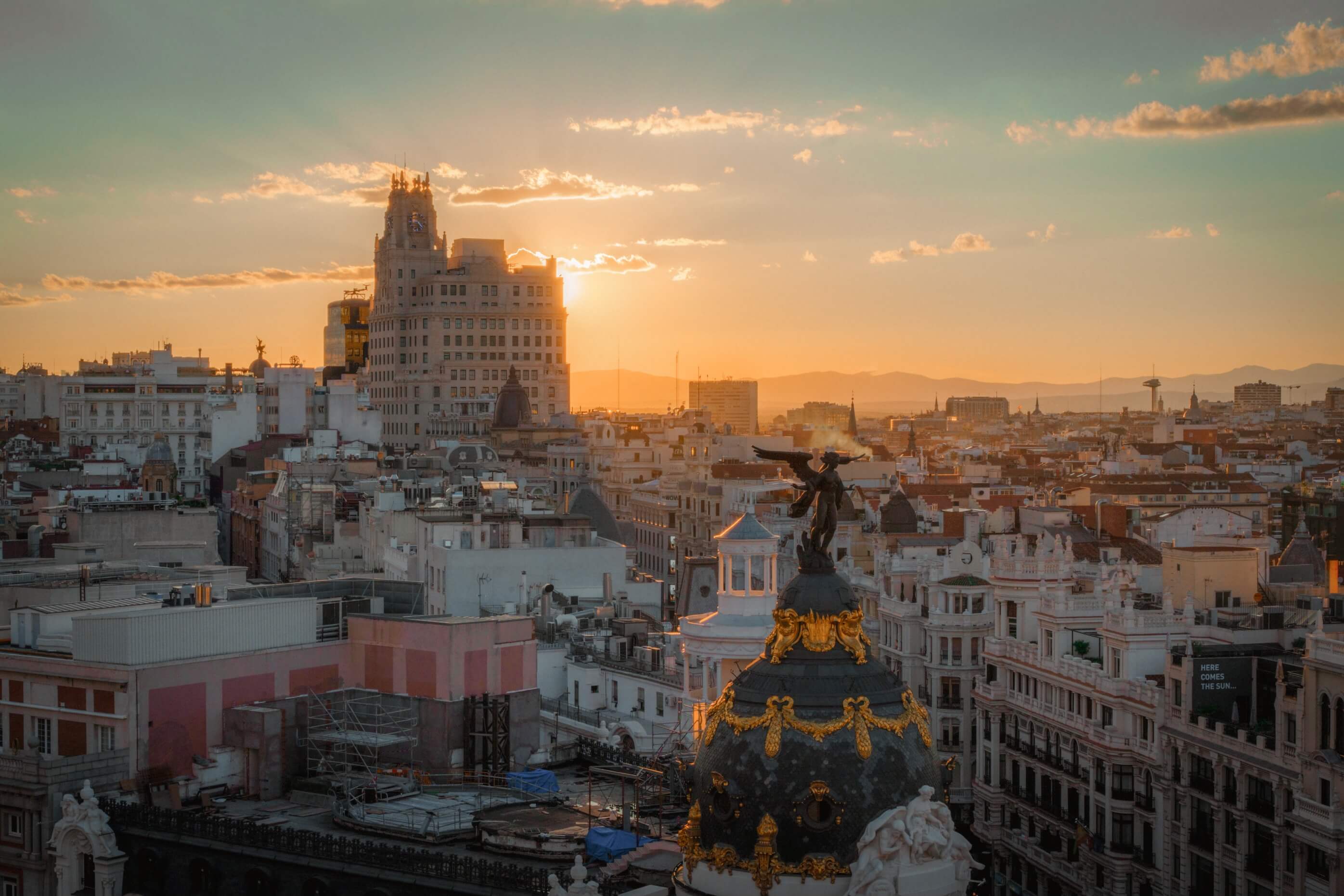
I would begin in Madrid. A few days to settle in, adjust to the rhythm, and experience the city properly.
From there, I would move north. The Basque Country or Asturias, where the landscape opens and the pace shifts. This is where I would ideally place the eclipse within the journey.
Then, a transition to the coastal south.
Andalusia brings contrast. Warmer evenings, deeper cultural immersion, and a completely different atmosphere to close the trip.
Each region offers something distinct, and together, they create a journey that feels intentional.
The eclipse becomes a moment within that story, not the whole story.
Why thoughtful design matters here
Events like the 2026 solar eclipse will naturally draw attention. There will be movement, demand, and a certain level of noise around it.
But what matters more is how you experience it.
Whether it feels rushed or grounded. Whether it happens to you, or is shaped in a way that feels personal.
That is always where I would focus my attention.
FAQs
When is the solar eclipse in Spain in 2026?
The solar eclipse will take place on August 12, 2026. It will be visible across much of Spain, with certain regions experiencing stronger visibility depending on their location.
Where is the best place to experience the eclipse in Spain?
Should I plan my entire trip around the solar eclipse?
Can the solar eclipse be part of a luxury travel experience?
How do you design a meaningful experience around the eclipse?
Is Spain a good destination for milestone travel in 2026?
Plan your Spain journey
Interested in experiencing the 2026 solar eclipse in Spain in a more meaningful way? Reach out to explore how this moment can be thoughtfully integrated into your journey.
Latest posts

The 2030 World Cup is coming to Spain, Portugal, and Morocco
In 2030 the World Cup comes to Spain, Portugal, and Morocco. Our travel coordinator Pedro Contreras Gonzalez, who has spent over twenty years in hospitality across Spain and the UK, on what has been confirmed, what has not, and what it means for anyone thinking about being there.
Read more

How to design a week in northern Morocco around the 2027 solar eclipse
A week in northern Morocco built around the 2027 solar eclipse combines Tangier, the blue city of Chefchaouen, and Tetouan's UNESCO medina for eclipse day, where four minutes and fifty-three seconds of totality will descend on one of the most culturally extraordinary cities in North Africa.
Read more

How to design a week in Andalusia around the 2027 solar eclipse
A week in Andalusia built around the 2027 solar eclipse covers Seville, Ronda, the Sierra de Grazalema, and Marbella for eclipse day, with enough time to experience one of the great destinations in southern Europe alongside one of the most extraordinary astronomical events of a lifetime.
Read more