The Dalí Triangle: A Guide to Visiting Portlligat, Figueres, and Púbol
The Dalí Triangle connects three sites across the Alt Empordà, each tied to a different register of one of the twentieth century's most deliberately constructed lives. This guide covers how to visit Portlligat, Figueres, and Púbol with the sequencing, timing, and cultural context that make the difference between a good day and a genuinely considered one.
There are artists whose homes and studios become museums, and there are artists whose lives were so thoroughly and deliberately constructed that the places they inhabited feel less like residences and more like extensions of the work itself. Salvador Dalí belongs firmly in the second category. The three sites that make up what is collectively known as the Dalí Triangle are not museums in any conventional sense. They are chapters in a biography written in architecture, landscape, and obsessive personal detail.
Understanding that distinction changes how you approach a visit.
What the Dalí Triangle Actually Is
Three sites, one extraordinary life
The Triangle connects three places in the Alt Empordà region of Catalonia, each tied to a different period and register of Dalí's life. Casa Dalí in Portlligat, a few minutes' walk from Cadaqués, was where he lived and worked for the better part of four decades. The Dalí Theatre-Museum in Figueres, the largest surrealist object in the world by Dalí's own description, was his most public statement and the project he returned to obsessively in the final years of his life. The Castle of Púbol, given by Dalí to his wife and muse Gala, is the quietest and most formally strange of the three. A gift with rules: Dalí himself could visit only with a written invitation.
Together they form something more coherent than a touring circuit. They form a portrait.
How the Triangle fits into a Costa Brava journey
The three sites sit within a roughly triangular geography across the Alt Empordà, with Portlligat in the northeast near Cadaqués, Figueres approximately forty kilometers inland to the northwest, and Púbol another thirty kilometers south toward the Baix Empordà. For travelers based in Cadaqués or on the northern Costa Brava, the Triangle is the natural cultural anchor for one or two days away from the coast. As part of a wider journey through the region, it connects naturally to the broader landscape that shaped Dalí's imagination: the flat agricultural plain of the Empordà, the Serra de Rodes, the particular quality of light that recurs throughout his work.
For those already familiar with our guide to slow travel on the Costa Brava, the Dalí Triangle sits precisely where we suggested it does: as a designed day, or two, built into a larger Catalonia itinerary rather than bolted on as an afterthought.
The Sites, Understood Individually
Casa Dalí Portlligat: the most intimate of the three
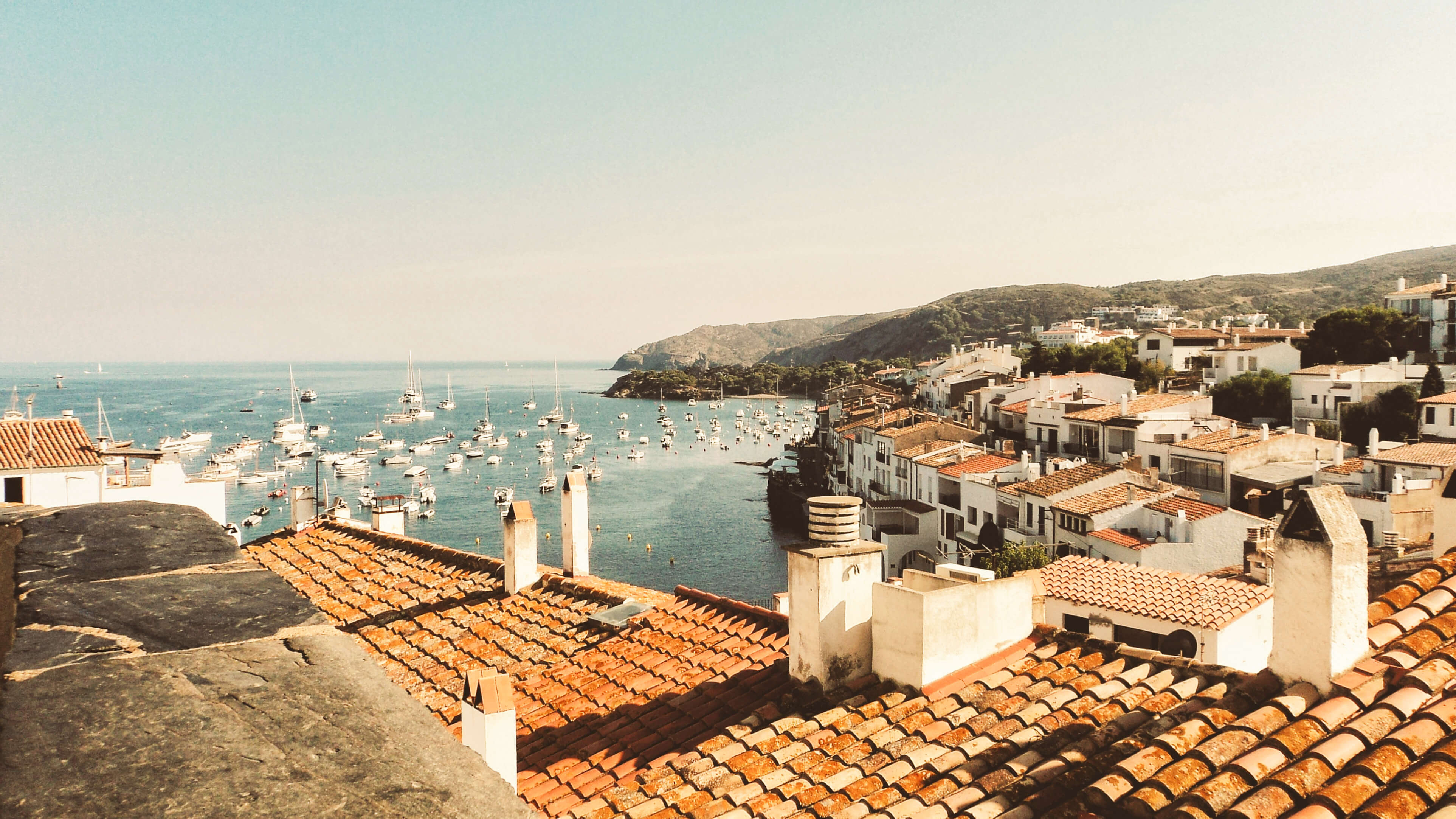
Portlligat is a small bay a short walk north of Cadaqués, and the house that Dalí built there across several decades reflects the same accumulative, non-linear logic as the work it was designed to support. What began as a fisherman's hut became, through incremental addition and obsessive intervention, a complex of interconnected spaces, gardens, a pool, a studio, and a web of personal iconography that makes almost every surface a statement of intent.
It is the most intimate of the three sites, and the visit reflects that. Numbers are strictly limited. The experience is unhurried in a way that larger museums rarely manage. You move through rooms where the domestic and the surreal are genuinely indistinguishable, and the cumulative effect is one of the more quietly unsettling cultural experiences available on this coast.
The bay of Portlligat itself is worth time before or after the visit. Sheltered and shallow, it has the particular quality of light that appears repeatedly in the paintings made here, and it gives the site a geographic logic that no interior visit can fully replace.
The Dalí Theatre-Museum, Figueres: spectacle as artistic statement
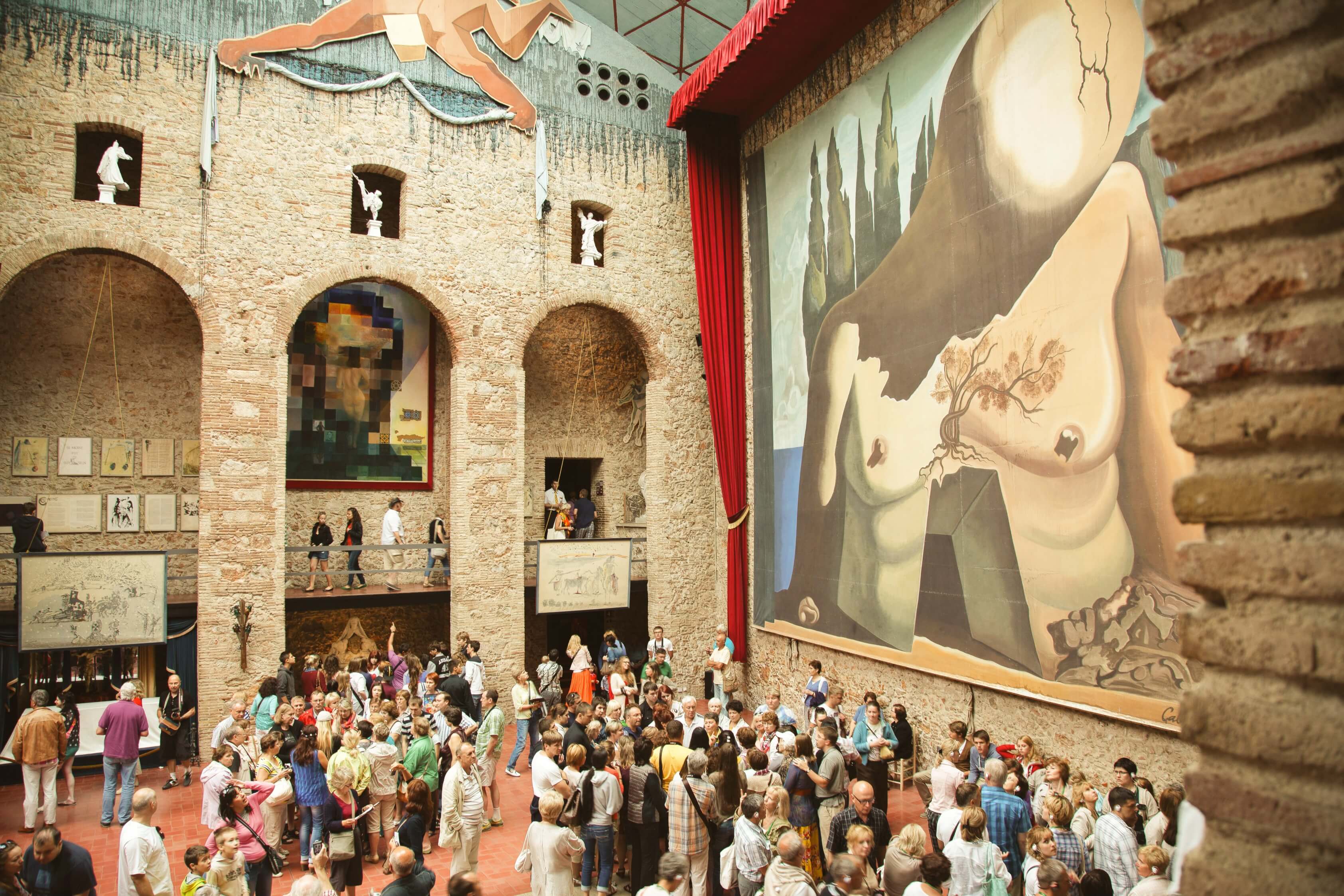
Figueres is Dalí's birthplace, and the Theatre-Museum he built on the ruins of the town's bombed municipal theatre is his most deliberate and most public work. It is the most visited museum in Spain after the Prado, a fact that would almost certainly have pleased him. It is also genuinely extraordinary in a way that visitor numbers might lead you to doubt.
The building itself is the first exhibit. The geodesic dome, the egg sculptures along the roofline, the facade studded with bread rolls, the way the interior spaces transition between architectural drama and intimate cabinet of curiosity. Dalí designed every aspect of the experience, including the sequence in which it unfolds, and that intention is still legible if you approach it with patience rather than pace.
The Theatre-Museum rewards a visit that does not try to see everything. The temptation to move quickly through a large and stimulating space is worth resisting. Choose a section, stay with it, and let the logic of the rooms reveal itself.
Castle of Púbol: Gala's house, Dalí's most restrained gesture
Púbol is the least visited of the three sites and, for the considered traveler, often the most rewarding. The medieval castle that Dalí acquired and restored for Gala in the late 1960s sits in a small village in the Baix Empordà, surrounded by the kind of flat agricultural landscape that feels remote from the coast even when it is not. The restoration is meticulous and personal, with Dalí's hand evident in every room, from the trompe l'oeil ceilings to the garden with its elephant sculptures to the preserved intimacy of Gala's private spaces.
What makes Púbol particular is its restraint. Relative to the Theatre-Museum's deliberate excess, the castle reads almost as an exercise in quiet. It is the site where the relationship between Dalí and Gala is most legible, and it rewards the kind of unhurried attention that the other two sites, with their larger visitor volumes, do not always make easy.
The village of Púbol itself is worth a short walk. It connects naturally to the medieval villages of the Alt Empordà, a landscape worth exploring on its own terms.
Designing the Day: Routing, Sequencing, and Timing
The case for a single day
All three sites are physically possible in a single day for a traveler with a car and an early start. The total driving time between them, from Portlligat through Figueres to Púbol, is under two hours, which leaves sufficient time at each site if the day is planned with discipline. What a single day does not allow for is genuine absorption. You will see the sites. You will not have time to return to the rooms that demand a second look, or to sit in the bay at Portlligat before the morning crowds arrive, or to spend an unhurried hour in Púbol's garden.
For a traveler with a serious interest in the work, a single day is a beginning rather than a conclusion.
The case for two days
Two days structured around the Triangle resolves the compression problem without requiring a dramatic reorganisation of a wider itinerary. Portlligat on its own, approached early in the morning from a base in Cadaqués, followed by a slow afternoon on the coast, makes for a complete and satisfying day. Figueres and Púbol on the second day, with the drive south through the Empordà plain, adds a geographic and cultural layer that enriches the experience of both sites.
This structure also allows the Theatre-Museum in Figueres to be visited at a pace that respects the space. Arriving when it opens and leaving before the midday volume builds is the most effective approach to a museum that can feel overwhelming when it is crowded.
Suggested sequence and practical considerations
The most effective single-day sequence, for a traveler based in Cadaqués or the northern Costa Brava, is Portlligat first, Figueres second, and Púbol last. This follows a geographic logic from north to south and builds from the intimate to the spectacular and back to the restrained.
Portlligat requires advance booking and has fixed entry times. This should be the first booking made when planning the day, as availability in summer fills weeks ahead. Figueres is accessible without pre-booking but rewards an early arrival. Púbol rarely requires advance reservation outside peak season but merits confirmation before the visit.
Lunch between Figueres and Púbol, in the Empordà plain or in the town of La Bisbal d'Empordà, is a practical and pleasurable pause. The cooking of the interior Empordà, rooted in the same agricultural landscape that shaped Dalí's visual world, is worth an unhurried hour before the final site of the day.
What to Know Before You Go
Booking and access
Casa Dalí Portlligat operates on a timed entry system with strictly limited visitor numbers. Booking well in advance, particularly in June, July, and August, is not optional. The Gala-Salvador Dalí Foundation manages all three sites and offers combined tickets that represent a considered approach to the Triangle as a whole rather than as three separate transactions.
All three sites are accessible by car. Portlligat is a short drive or walk from Cadaqués. Figueres is well served by the AP-7 motorway and also reachable by train from Girona and Barcelona for those building the day from a different base. Púbol is a rural location and requires a car.
What the experience asks of you
The Dalí Triangle is not a passive experience. The sites reward engagement, prior familiarity with the work, and a willingness to move slowly. Visitors who arrive expecting a conventional museum chronology will find the Theatre-Museum particularly disorienting. That disorientation is, of course, the point.
Approaching all three sites with an openness to the logic of the spaces, rather than a programme to complete, is the most reliable way to leave with something worth carrying.
FAQs
What is the best order to visit the Dalí Triangle?
For travelers based on the northern Costa Brava or in Cadaqués, the most effective sequence is Portlligat first, Figueres second, and Púbol last. This follows a natural geographic route south and moves from the most intimate site to the most spectacular and finally to the most restrained, which gives the day a coherent arc.
Can you visit all three Dalí sites in one day?
Do you need to book the Dalí Triangle in advance?
How far is the Dalí Triangle from Cadaqués?
Is the Dalí Triangle suitable for travelers who are not Dalí specialists?
What is the difference between the three Dalí sites?
Plan Your Dalí Triangle Day
The Dalí Triangle rewards careful planning and the right amount of time at each site. Contact us to discuss how we build cultural days like this into a wider Costa Brava or Catalonia journey.
Latest posts

The 2030 World Cup is coming to Spain, Portugal, and Morocco
In 2030 the World Cup comes to Spain, Portugal, and Morocco. Our travel coordinator Pedro Contreras Gonzalez, who has spent over twenty years in hospitality across Spain and the UK, on what has been confirmed, what has not, and what it means for anyone thinking about being there.
Read more

How to design a week in northern Morocco around the 2027 solar eclipse
A week in northern Morocco built around the 2027 solar eclipse combines Tangier, the blue city of Chefchaouen, and Tetouan's UNESCO medina for eclipse day, where four minutes and fifty-three seconds of totality will descend on one of the most culturally extraordinary cities in North Africa.
Read more

How to design a week in Andalusia around the 2027 solar eclipse
A week in Andalusia built around the 2027 solar eclipse covers Seville, Ronda, the Sierra de Grazalema, and Marbella for eclipse day, with enough time to experience one of the great destinations in southern Europe alongside one of the most extraordinary astronomical events of a lifetime.
Read more