
Why Morocco might be the most rewarding destination you haven't considered for your family
A guide to travelling Morocco as a family, covering the destinations, pacing, and design thinking that allow every generation to experience the country in their own way.
A guide to travelling Morocco as a family, covering the destinations, pacing, and design thinking that allow every generation to experience the country in their own way.
Morocco is one of the few destinations where a family spanning three generations can travel together and each find something that feels entirely their own. Not because the country tries to be everything to everyone, but because it already holds contrast, stillness and intensity, solitude and gathering, simplicity and richness, within a single, deeply human rhythm.
A well-designed journey through Morocco does not attempt to do everything. It creates space for shared wonder, while allowing each generation to move through the country at their own pace.
Why Morocco works for family travel
A country built on contrast
Morocco offers a rare range within a single destination. Imperial cities with centuries of layered history. Deserts that hold a silence found almost nowhere else. Mountain villages where the pace of life has barely shifted in generations. Coastal towns shaped by trade, wind, and the Atlantic.
This range matters for family travel because it means a journey rarely has to compromise. A grandparent who wants stillness and a teenager who wants adventure can both find their version of Morocco within the same week, often within the same day.
Hospitality that holds every generation
Morocco's culture of hospitality is not a tourism feature. It is a daily reality, expressed through mint tea offered without asking, through unhurried meals, through a warmth extended to children and elders alike. Travelling here, families often find that the country does some of the work of bringing generations closer simply through the way it welcomes them in.
How to design a family journey in Morocco
Pace before plans
The most successful family journeys in Morocco are not built around a list of sights. They are built around rhythm, and rhythm, in Morocco, means something specific. It means mornings that begin without urgency, lunches that run longer than planned, afternoons that allow for rest or exploration depending on who needs which, and evenings that bring everyone back together without the pressure of a packed night schedule. Over-scheduling is the fastest way to create friction within a group travelling across generations. Thoughtful pacing, by contrast, allows a journey to flex around the people in it rather than the other way round.
Shared moments and personal space
Not every moment of a Morocco journey needs to include everyone, and the strongest itineraries are designed with this in mind. A souk walk that the whole family takes together in the morning, an afternoon where younger members hike while grandparents rest by the pool, an evening meal that brings the day back into one shared conversation, this kind of layering, rather than constant enforced togetherness, is what allows a family trip to feel genuinely connected without becoming exhausting for anyone in it.
Understanding Morocco by region
Marrakech
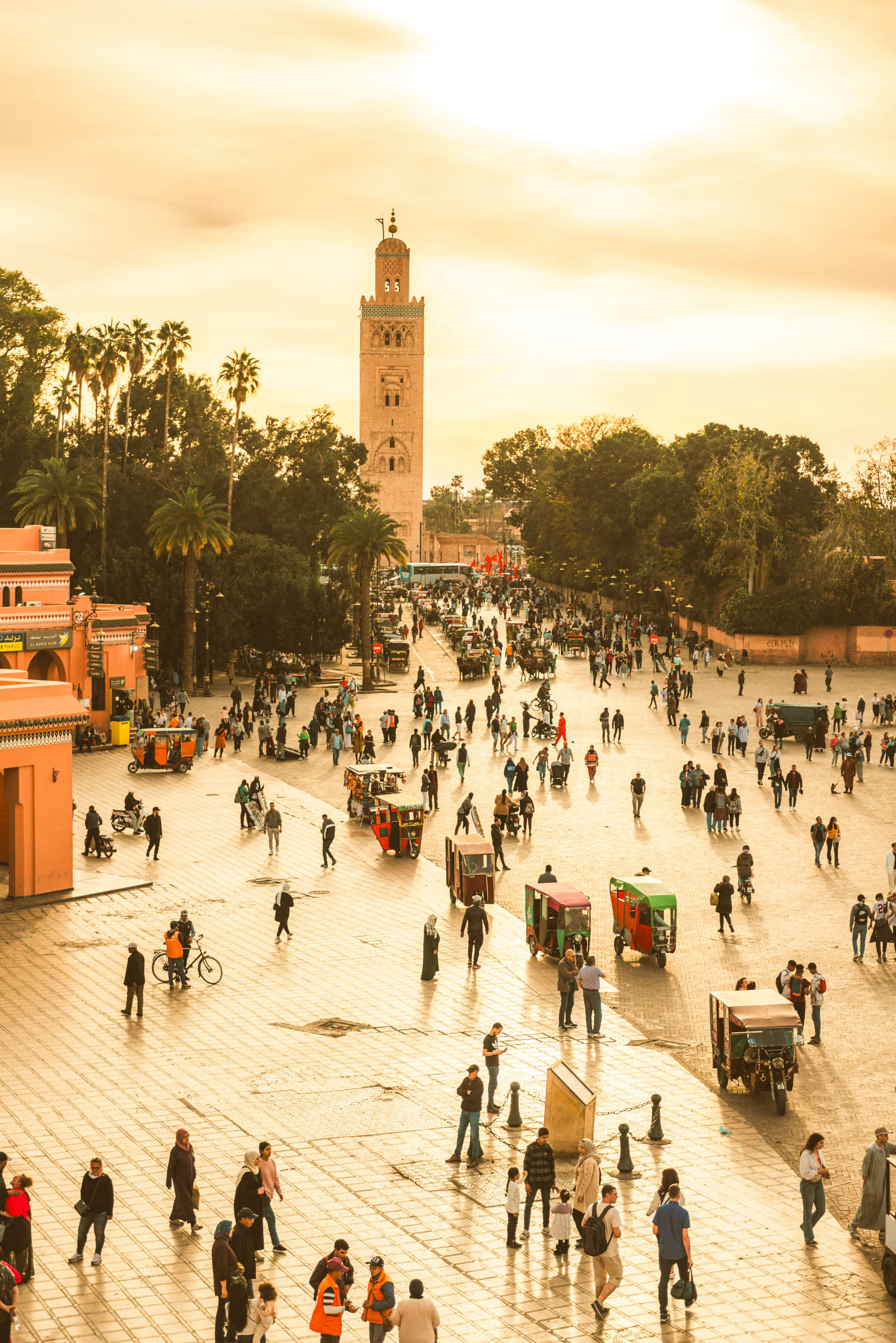
Marrakech is where most Morocco journeys begin, and it earns that position. Its medina holds centuries of craft and trade within streets that reward curiosity at every turn, its riads offer a private and restful base after a day of exploring, and its balance of cultural intensity and physical comfort makes it a natural starting point for travellers of any age and any pace.
The Sahara
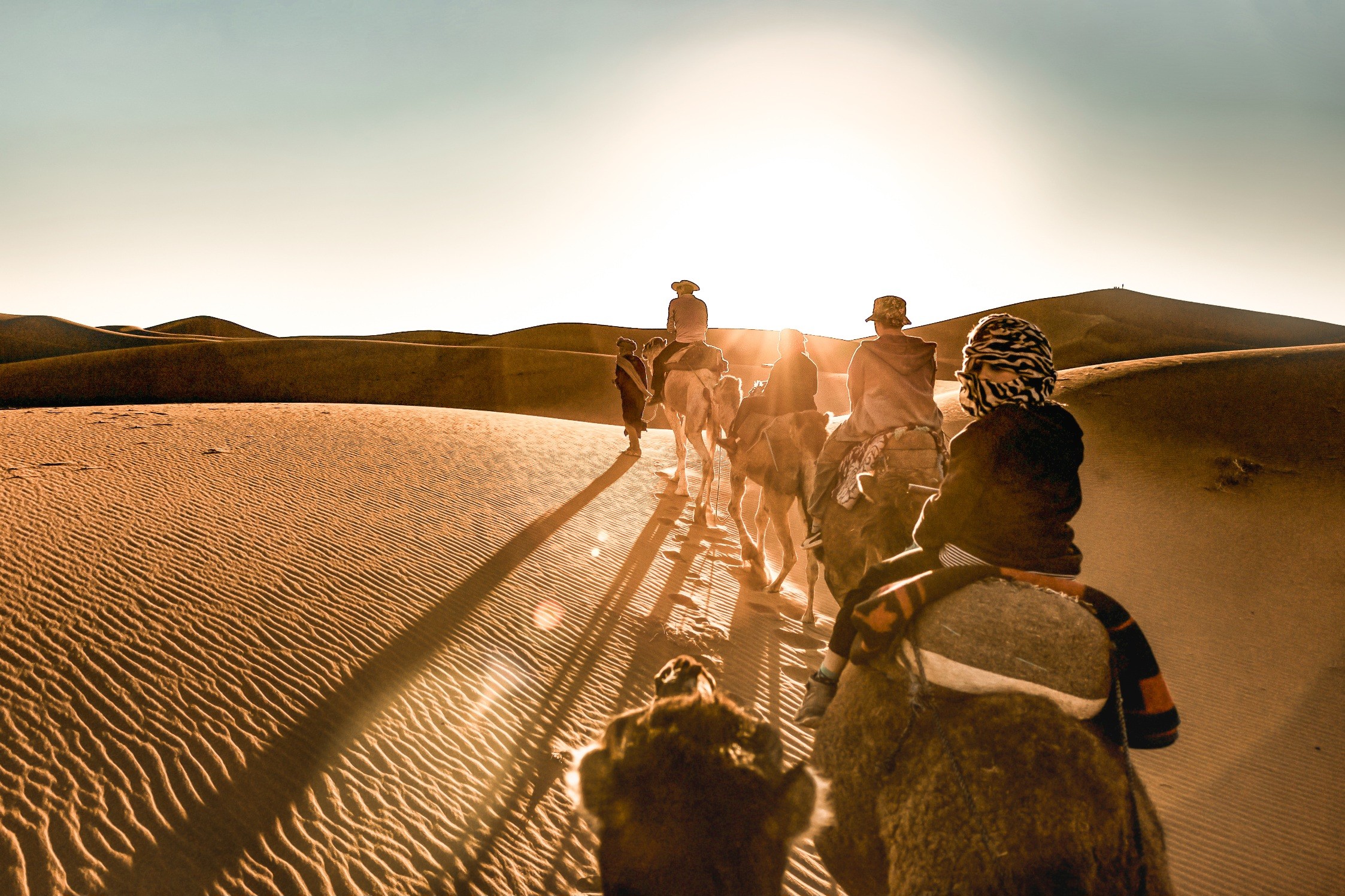
For many families, the Sahara is the moment the journey becomes unforgettable, and it tends to arrive as a surprise, even for those who anticipated it. A night in a luxury desert camp, under skies with no light pollution for miles in any direction, has a way of resetting the pace of an entire trip in a single evening. It asks relatively little physically beyond a short camel ride or a walk into the dunes, which makes it considerably more accessible across generations than its remoteness might suggest.
The Atlas Mountains
Just south of Marrakech, the Atlas Mountains offer a completely different register from the city, cooler air, terraced valleys, Berber villages built into hillsides, and walking routes that range from a gentle riverside stroll to a serious high-altitude trek. It is one of the most natural places on a Morocco itinerary to allow a family to split by ability and interest, with younger or more active members heading higher into the landscape while others settle into a long lunch in a local home, reconvening in the afternoon with different stories from the same morning.
Essaouria
A coastal counterpoint to the intensity of Marrakech, Essaouira offers a different quality of Morocco altogether, slower mornings, fresh seafood, a walled medina that feels considerably calmer and more navigable than its inland counterparts, and an Atlantic breeze that keeps the city cooler than almost anywhere else in the country. It works well as the final stop on a longer Morocco journey, providing a natural deceleration before the return home, or as a mid-trip pause that resets the group's energy before the next destination.
Fès
Fès rewards families who travel with a genuine interest in craft, history, and the depth that comes from slowing down in a place rather than moving through it. Its medina, Fès el-Bali, is the largest car-free urban area in the world, and its tanneries, ateliers, and madrasas are not museum pieces but working realities of a city that has operated in essentially the same way for over a thousand years. For families with older children, teenagers, or a genuine appetite for cultural depth, it is the Morocco destination that tends to leave the strongest impression.
Tangier
Tangier is Morocco's northern gateway and its most outward-facing city, shaped by centuries of trade, diplomacy, and the particular energy of a place where Europe and Africa are visible from the same shoreline. For families arriving from Spain by ferry, the crossing takes forty-five minutes and delivers one of the more immediate transitions in travel: stepping off the boat into a city that is unmistakably Moroccan in character while remaining deeply connected to the continent behind you.
The city rewards families who move through it slowly. The Kasbah above the medina offers the clearest view across the Strait of Gibraltar, a moment that tends to land differently depending on who is looking at it: a grandparent who remembers a world before easy travel, a teenager encountering a genuinely unfamiliar geography for the first time. The Grand Socco, the square at the medina's edge, is a natural gathering point, busy without being overwhelming, and the kind of place where a family can split for an hour and find each other again without effort.
Tangier also works as a departure point for day excursions that suit different members of the group: Cap Spartel and the Hercules Caves to the west, the beach towns of the Tangier Peninsula, or the Rif Mountain foothills that begin almost immediately south of the city. For families combining Morocco with a southern Spain itinerary, Tangier offers an entry or exit that turns a border crossing into a destination in its own right.
Where to stay as a family
Riads, kasbahs, and desert camps at a glance
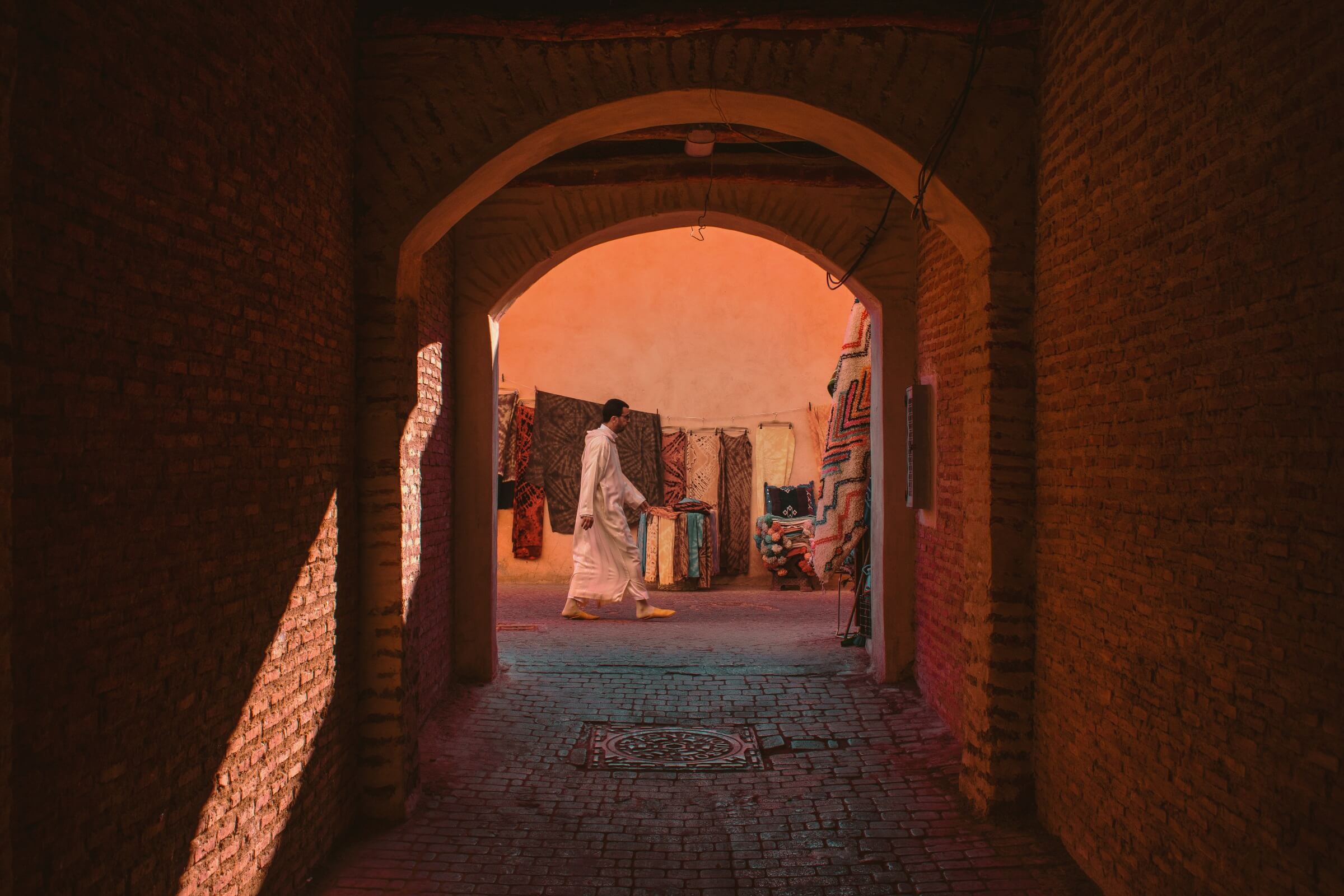
Where a family stays in Morocco shapes the texture of the days as much as the destinations themselves. Riads, traditional courtyard homes converted into boutique stays, suit cities like Marrakech and Fès, offering privacy and quiet within a few steps of the medina's energy. Kasbahs, fortified estates in the Atlas foothills and the south, suit families wanting more seclusion and space. Luxury desert camps bring the Sahara experience into sharp, comfortable focus, often with ensuite tents and private dining beneath the stars.
The right choice depends on the rhythm of the day around it, a question covered in more depth in our guide to where to stay in Morocco.
Getting around Morocco with family
Transfers, distances, and what to expect
Morocco rewards a journey that moves at a considered pace rather than a packed one. Marrakech to the Atlas foothills is under an hour. Marrakech to the Sahara is a longer day's drive, often broken into two with an overnight in the Drâa Valley along the way. Essaouira sits roughly two and a half hours from Marrakech, making it a natural single transfer rather than a rushed day trip.
Private transfers remove much of the friction multigenerational groups encounter elsewhere, and allow flexibility for rest stops, photo pauses, or a change of plan without disrupting the rest of the group.
The moments that bring everyone together
Food, ritual, and shared experience
Morocco's most memorable family moments are rarely the headline experiences. They tend to be the smaller ones, a shared tagine on a riad rooftop as the evening light fades over the medina, mint tea poured from height as a small and unhurried ceremony in itself, a grandparent teaching a grandchild how to navigate a souk stall with confidence and a little theatre. These rituals around food and hospitality create natural gathering points for a family travelling at different paces, offering reliable moments each day where every generation comes back together without anyone having to organise it.
FAQs
Is Morocco a good destination for families?
Yes. Morocco's range of destinations, from cities to desert to mountains to coast, means most family groups can find a version of the country that suits their pace and interests, often within the same itinerary.
Is Morocco suitable for grandparents and older travellers?
How many days do you need for a family trip to Morocco?
What is the best time of year to visit Morocco with your family?
Is a lot of walking required in Morocco?

Design your family's journey through Morocco
The right Morocco journey depends on the rhythm you want for your family. Contact us to discuss the options and design a trip that fits every generation, from the first decision.
Latest posts

The 2030 World Cup is coming to Spain, Portugal, and Morocco
In 2030 the World Cup comes to Spain, Portugal, and Morocco. Our travel coordinator Pedro Contreras Gonzalez, who has spent over twenty years in hospitality across Spain and the UK, on what has been confirmed, what has not, and what it means for anyone thinking about being there.
Read more

How to design a week in northern Morocco around the 2027 solar eclipse
A week in northern Morocco built around the 2027 solar eclipse combines Tangier, the blue city of Chefchaouen, and Tetouan's UNESCO medina for eclipse day, where four minutes and fifty-three seconds of totality will descend on one of the most culturally extraordinary cities in North Africa.
Read more

How to design a week in Andalusia around the 2027 solar eclipse
A week in Andalusia built around the 2027 solar eclipse covers Seville, Ronda, the Sierra de Grazalema, and Marbella for eclipse day, with enough time to experience one of the great destinations in southern Europe alongside one of the most extraordinary astronomical events of a lifetime.
Read more