
Beach Horse Racing in Sanlucar de Barrameda: Spain's Most Unexpected August Spectacle
Every August, thoroughbred horses race along the tidal beach at Sanlucar de Barrameda as they have done since 1845. The Carreras de Caballos is one of Spain's most extraordinary sporting spectacles and one of its least known internationally. In 2026 the races run across two cycles: 8 to 10 August and 21 to 23 August.
The oldest beach horse races in Spain return for their 181st edition in August 2026. Here is what happens, where to watch, and why Sanlucar de Barrameda deserves more than a single afternoon.
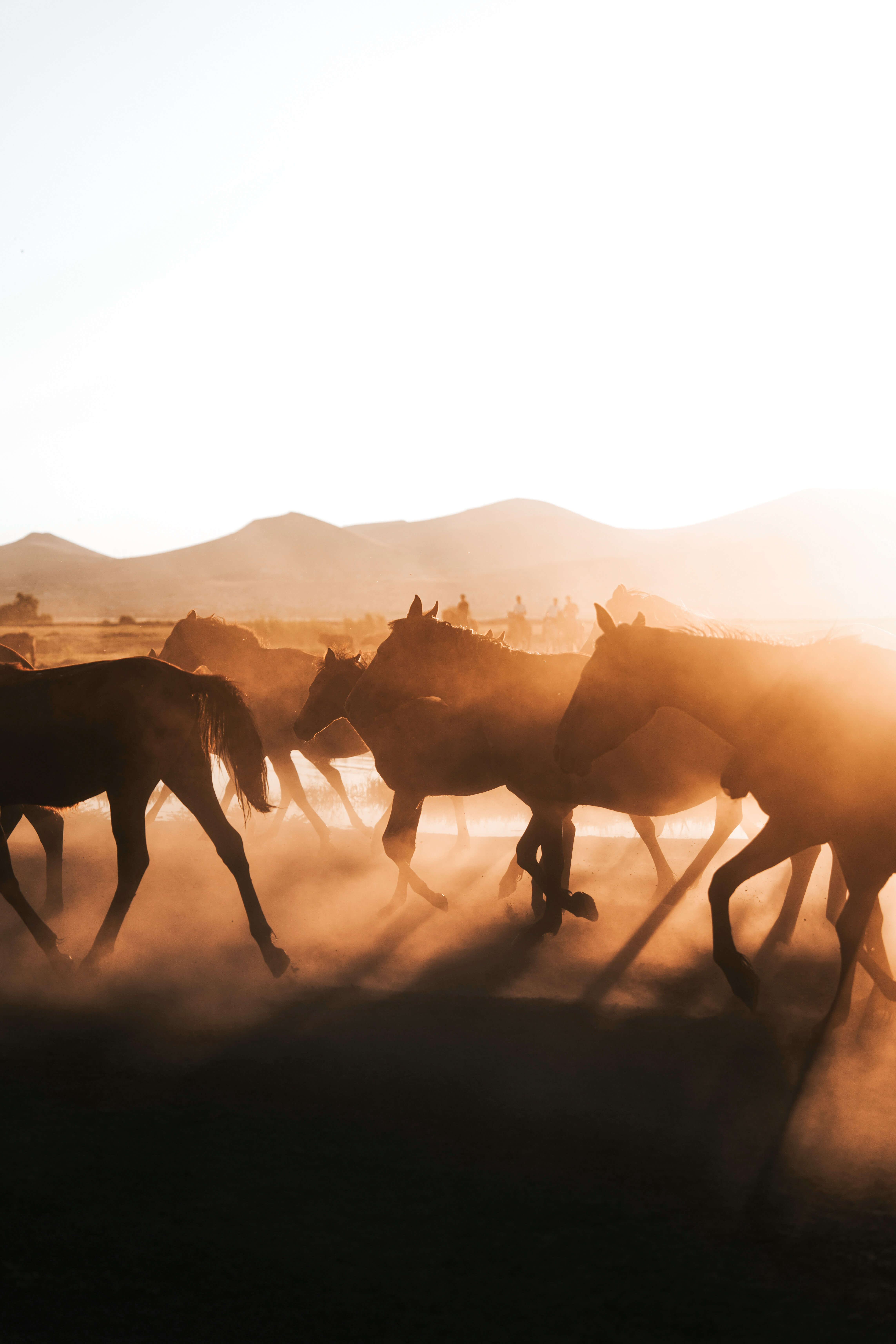
There is a moment, just before the horses break from the start, when the beach at Sanlucar de Barrameda goes quiet. The crowd that has been filling the shoreline since late afternoon, seated in the grandstands, perched on the sea wall, standing ankle-deep in the shallows, holds something back. Then the race begins and the sound returns all at once: hooves on wet sand, the collective intake of breath from thousands of people watching thoroughbreds run at full speed along the edge of the Atlantic with the marshes of Donana visible across the river on the opposite bank.
It is one of the more extraordinary sporting spectacles in Europe. It is also almost entirely unknown outside Spain.
What the Carreras de Caballos actually is
The beach horse races at Sanlucar de Barrameda have been running since 1845, making them the oldest equestrian event on sand in Spain and one of the oldest in Europe. They take place every August across two cycles of three days each, on a stretch of beach where the Guadalquivir meets the Atlantic and the low tide leaves enough firm, flat sand for a proper racing track.
The event was declared a Festival of International Tourist Interest in 1997, a designation that sits slightly at odds with how genuinely local it remains. The crowds are overwhelmingly Andalusian. The atmosphere is that of a community gathering that has been happening for 181 years and has no intention of changing to accommodate anyone who arrives without knowing its history.
That continuity is exactly what makes it worth the journey.
The races are run by the Real Sociedad de Carreras de Caballos de Sanlucar de Barrameda, which organises the programme, manages the grandstands, and sets the dates each year according to the tide calendar. The races must coincide with a low tide of sufficient depth to expose enough beach for the horses to run. That dependency on the sea gives the event a quality that no conventional racecourse can replicate: the timing is nature's, not the organiser's, and on race days the beach belongs to the horses.
The 2026 dates and how the cycles work
The 2026 Carreras de Caballos run across two cycles. The first takes place on 8, 9 and 10 August. The second runs on 21, 22 and 23 August. Between the two cycles, Sanlucar celebrates its own patron saint festival, with the procession of Nuestra Senora de la Caridad Coronada on 15 August, giving the town a full mid-August of consecutive reasons to be at its most festive.
Each race day follows a similar rhythm. The beach begins to fill from the late afternoon, as the tide retreats and the track takes shape. The races are run in the early evening, timed to the best of the low tide window, which means the light as the horses cross the finish line is often the particular golden-hour quality that the Costa de la Luz does better than almost anywhere else on the Atlantic coast.
Watching from the grandstands gives a more organised experience, with a closer view of the finish line and access to the betting enclosures. Watching from the beach itself, standing or sitting on the sand among the crowd, gives something entirely different: the physicality of the horses at close range, the spray of wet sand, the noise of hooves that you feel as much as hear. Both are worth experiencing. The beach, for a first visit, is the more complete one.
What Sanlucar de Barrameda is
Sanlucar de Barrameda sits at the mouth of the Guadalquivir, on the Costa de la Luz in the province of Cadiz. It is a town of around 70,000 people with a history that is considerably larger than its current profile suggests. Columbus departed from here on his third voyage to the Americas. Magellan began his circumnavigation of the globe from the same quay. The town's position at the river mouth, controlling access to Seville and the trade routes of the Atlantic, made it one of the most strategically significant ports in sixteenth-century Europe.
What remains of that history is a town with genuine architectural weight: a castle, a ducal palace, a Baroque church, and a barrio alto of whitewashed streets above the river that rewards an afternoon of unhurried walking. The lower town, Bajo de Guia, sits directly on the riverbank and is where the best restaurants concentrate, serving the langostinos de Sanlucar, the large prawns from the Guadalquivir estuary that are among the most prized shellfish in Andalusia and entirely worth seeking out.
The town is also the production centre for manzanilla, the lightest and most saline of the Sherry wines, which develops its particular character from the humidity of the sea air in the bodegas along the river. Drinking manzanilla in Sanlucar, poured cold from the barrel in a bar in Bajo de Guia with a plate of langostinos beside it and the Donana marshes visible across the water, is one of the more specific and genuinely pleasurable experiences that Andalusia offers. It does not travel. You have to go there.
Donana and the Guadalquivir
The view from the beach at Sanlucar is one of the reasons the races have the particular atmosphere they do. Across the Guadalquivir, which is here at its widest before it reaches the sea, the marshes and pine forests of Donana National Park extend along the opposite bank with no visible development or habitation. It is a genuinely wild horizon in a country where genuinely wild horizons are increasingly difficult to find.
Donana is one of the most significant wetland ecosystems in Europe, a UNESCO World Heritage Site and Biosphere Reserve that protects a landscape of marshes, dunes, and Mediterranean scrubland supporting one of the continent's most diverse concentrations of bird species. It is accessible from Sanlucar by boat, with regular crossings from the Bajo de Guia quay to the park's visitor centre on the opposite bank, from where guided tours into the park interior depart.
A visit to Donana adds a dimension to a Sanlucar stay that turns a race weekend into something significantly more complete. The morning crossing to the park, the afternoon back in town for the pre-race build-up, and the evening on the beach as the horses run with the last of the Atlantic light behind them constitutes one of those days that does not require embellishment.
How to approach a visit
Sanlucar de Barrameda sits approximately an hour from Seville by car and around forty-five minutes from Jerez de la Frontera. Both make practical bases for those who want the races without committing to a full stay in Sanlucar itself, though the town has enough to warrant two or three nights independently of the races.
The first cycle, 8 to 10 August, tends to draw a more local crowd and a slightly more relaxed atmosphere. The second cycle, 21 to 23 August, is the more prestigious, with the larger prizes and the greater volume of visitors. For a first visit, the second cycle delivers the fuller version of the event. For those who want the experience before the crowds peak, the first cycle is the quieter option.
Accommodation in Sanlucar during race weekends fills quickly and is worth booking well in advance. The town itself has a limited hotel offer, and the better options are concentrated in and around the historic centre and Bajo de Guia. Jerez and Seville both have a wider accommodation range for those treating the races as a day trip or evening excursion.
The races are free to watch from the beach. The grandstands require tickets, available through the Real Sociedad de Carreras de Caballos. For the full official programme and race schedules: www.carrerassanlucar.es
Why this one belongs on your August calendar
The Carreras de Caballos de Sanlucar occupy a specific position in the calendar of Spanish events: ancient enough to have genuine historical weight, specific enough to resist the kind of mass tourism that reshapes festivals elsewhere, and visually extraordinary enough that a single evening on the beach tends to produce the desire to return the following year.
That combination, 181 years of uninterrupted tradition, a natural setting of real beauty, a town with its own significant pleasures, and a sporting spectacle that exists nowhere else in quite this form, is not something that turns up often. August in Sanlucar is worth the detour, and the detour is shorter than most people realise.
Latest posts

How to design a week in northern Morocco around the 2027 solar eclipse
A week in northern Morocco built around the 2027 solar eclipse combines Tangier, the blue city of Chefchaouen, and Tetouan's UNESCO medina for eclipse day, where four minutes and fifty-three seconds of totality will descend on one of the most culturally extraordinary cities in North Africa.

How to design a week in Andalusia around the 2027 solar eclipse
A week in Andalusia built around the 2027 solar eclipse covers Seville, Ronda, the Sierra de Grazalema, and Marbella for eclipse day, with enough time to experience one of the great destinations in southern Europe alongside one of the most extraordinary astronomical events of a lifetime.

What to know before eclipse day 2027: insider tips for 2 August
The 2027 eclipse is four minutes of totality. The preparation before it determines whether those four minutes are everything they should be. This insider guide covers road closures, booking timing, cloud contingencies, eclipse glasses, and what to expect hour by hour on 2 August.