Top Places to Visit in Córdoba
From the grand Mezquita to the lush gardens of the Alcázar and the courtyards of Palacio de Viana, Córdoba blends Roman, Muslim, and Christian heritage into a city unlike any other in Spain. A must-visit stop on any Andalusian journey.
In the south of Spain stands Córdoba, a small city filled with all sorts of different adventures to be had. Córdoba is unlike a lot of other cities in Spain because of the unique landmarks the city has to offer. To fully understand the distinctive characteristics of Córdoba, we have to know the history behind this city of 780,000 people and how Córdoba came to be.
Established by Romans because of its key location among the Guadalquivir River, Córdoba has the largest olive oil port in the world. This made it a central location of trade and kept the city growing and evolving.
Over time, the Muslim religion rose to be predominant in this city. This is where a lot of different buildings that still stand today came from. What is so fascinating about all of this is that in 1236 when Christianity took over, they decided to let the buildings stand and reuse them for their own use within the Christian community.
Today, aspects of both Muslim culture and Christianity are demonstrated throughout the city. Visitors are amazed by incredible landmarks with breathtaking architecture that demonstrate the power of history along with these coexisting religions.
The Mezquita
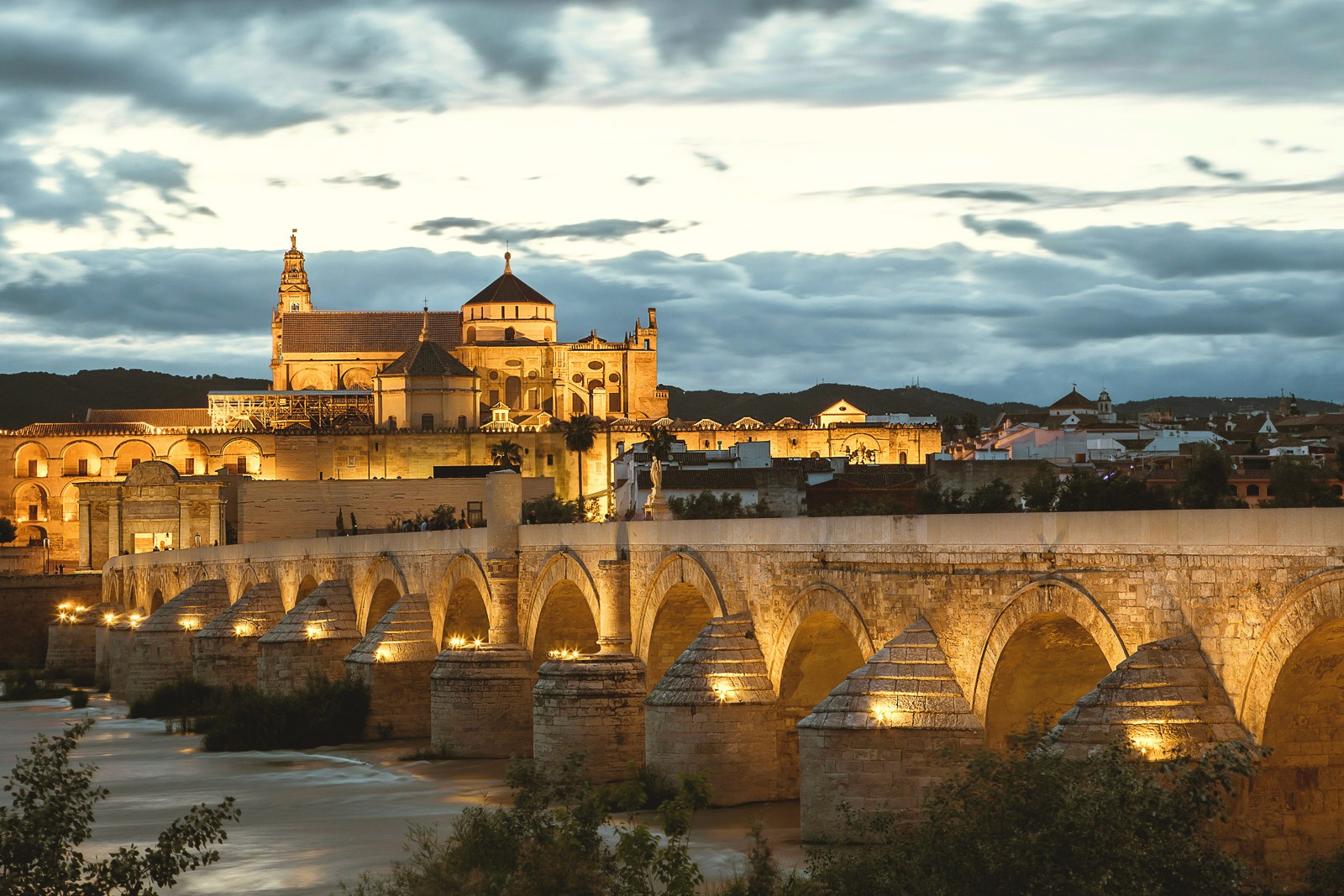
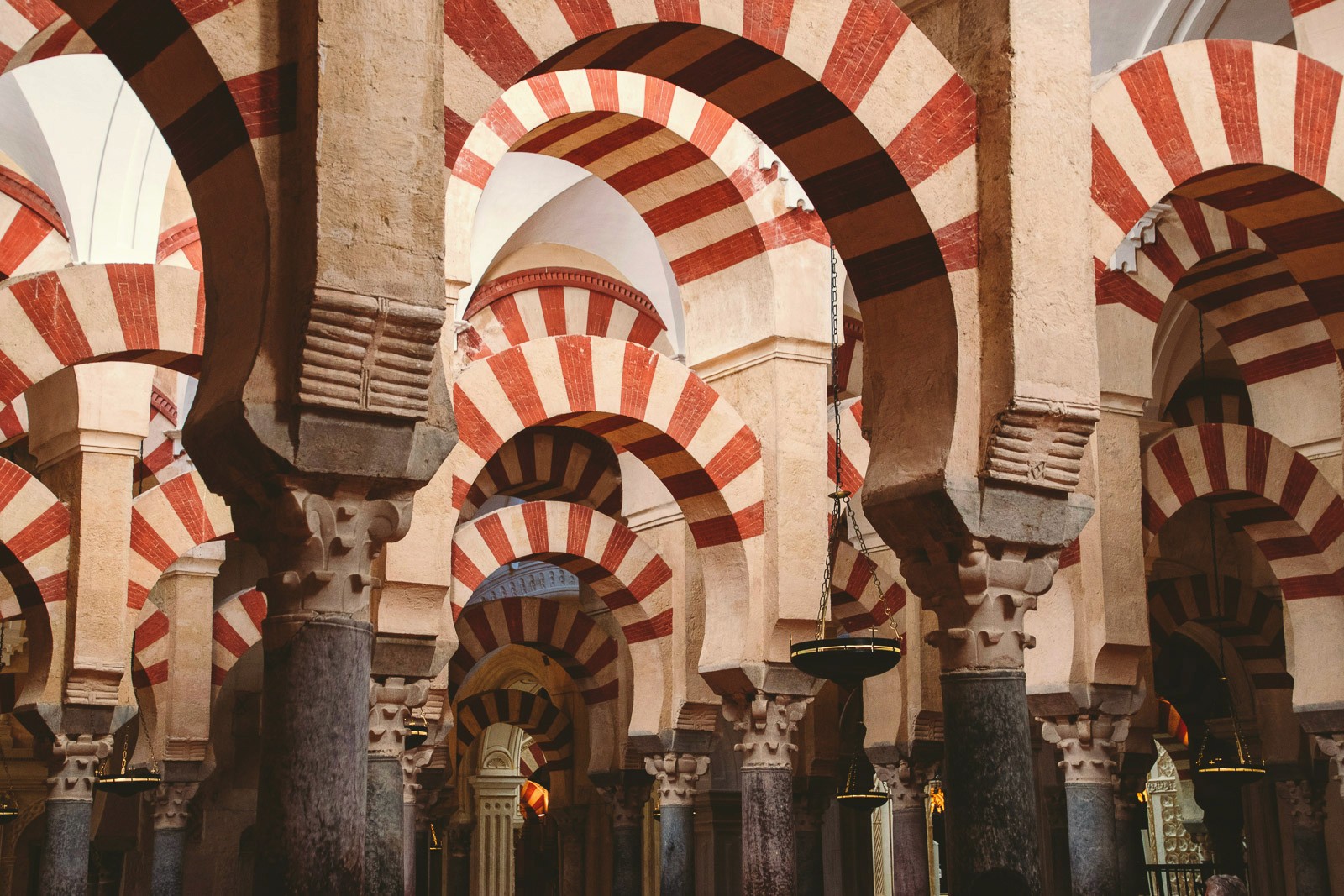
One of the most famous buildings from this time was the Mezquita, also known as the Mosque-Cathedral of Córdoba. The title of this wonder is self-explanatory. This building was founded as a mosque but when the Christians took over, they loved the building and did not want to change anything about it. Specifically Christian elements were added inside the building. With only a small admission fee, this is a great way to explore the history and significance of Córdoba.
The Alcázar of the Christian Monarchs
The Alcázar of the Christian Monarchs is said to date back to when Julius Caesar was ruler of the Romans. It’s said the plants there today are from when he planted them. This place is filled with water streams from the river along with several fountains.
Palacio de Viana
The other garden, Palacio de Viana, is also known as the museum of courtyards. This palace is home to twelve different courtyards, some dating back up to five centuries. You won’t even feel like you are in a city when surrounded by the serenity of the greenery and fountains.
As you can see, the individuality of the city of Córdoba is unmatched. Its history plays an imperative role in the attraction of this interesting southern city. Don’t miss this unforgettable stop on your journey through Andalusia. You won’t regret strolling through the town square of Plaza de la Corredera and the charming street of Calleja de las Flores. Córdoba has it all!
Explore Córdoba with Us
Let us design your journey through Córdoba, from the Mezquita to hidden courtyards, blending history, culture, and Andalusian charm.
Latest posts

The 2030 World Cup is coming to Spain, Portugal, and Morocco
In 2030 the World Cup comes to Spain, Portugal, and Morocco. Our travel coordinator Pedro Contreras Gonzalez, who has spent over twenty years in hospitality across Spain and the UK, on what has been confirmed, what has not, and what it means for anyone thinking about being there.
Read more

How to design a week in northern Morocco around the 2027 solar eclipse
A week in northern Morocco built around the 2027 solar eclipse combines Tangier, the blue city of Chefchaouen, and Tetouan's UNESCO medina for eclipse day, where four minutes and fifty-three seconds of totality will descend on one of the most culturally extraordinary cities in North Africa.
Read more

How to design a week in Andalusia around the 2027 solar eclipse
A week in Andalusia built around the 2027 solar eclipse covers Seville, Ronda, the Sierra de Grazalema, and Marbella for eclipse day, with enough time to experience one of the great destinations in southern Europe alongside one of the most extraordinary astronomical events of a lifetime.
Read more