Cooking in the Costa Brava
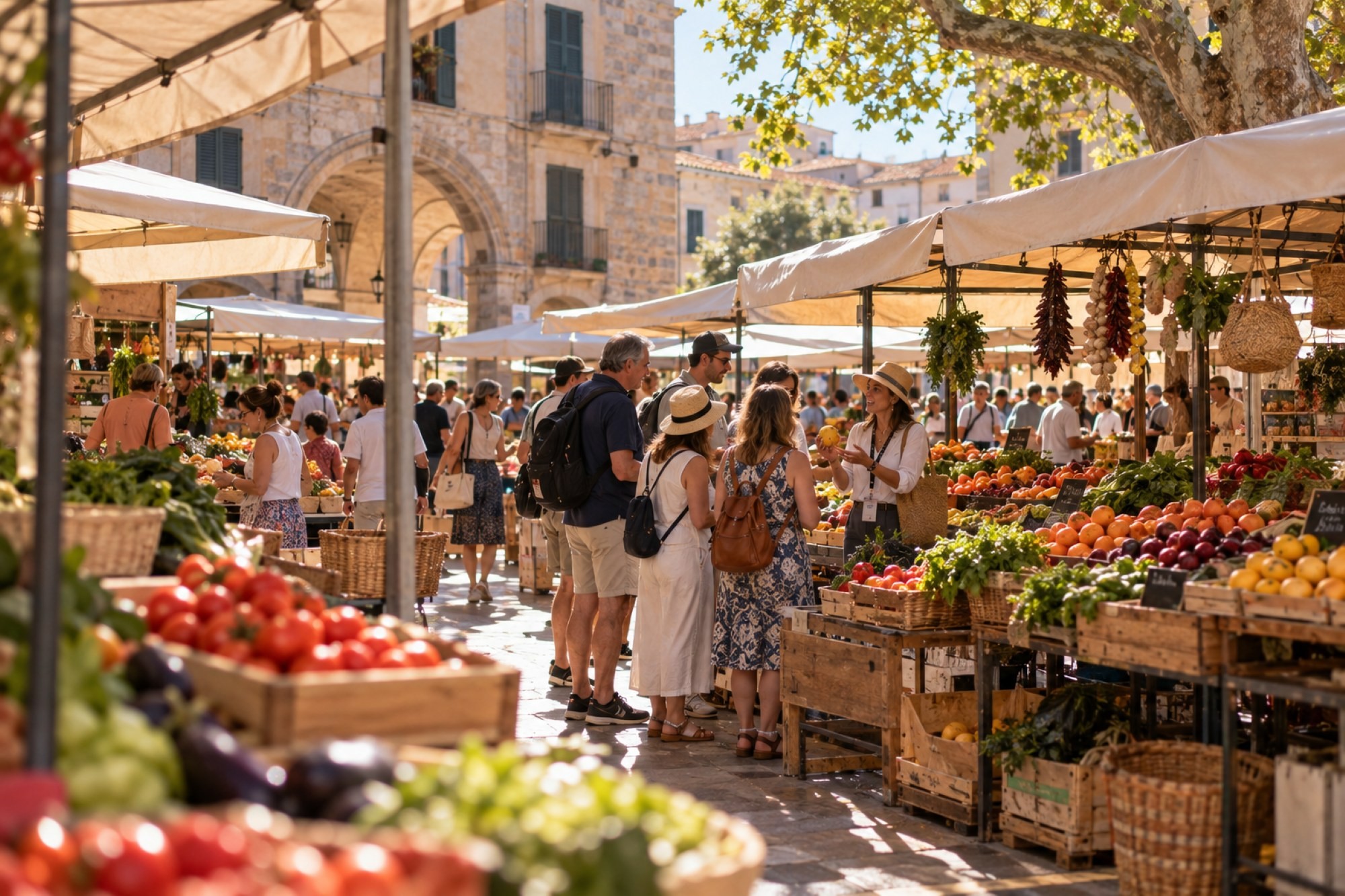
A cooking trip shaped by the people who feed the Costa Brava: fishermen, rice growers, anchovy salters, and home cooks. Each day starts with an ingredient at its source and ends at the stove, with recipes that belong to this stretch of coast. Six days cooking the Costa Brava from the source, from the Palamós fish auction to the rice fields of Pals and a local grandmother's kitchen.
" width="24px"><path d="M 0 3 C 0 1.343 1.343 0 3 0 C 4.657 0 6 1.343 6 3 C 6 4.657 4.657 6 3 6 C 1.343 6 0 4.657 0 3 Z" fill="transparent" height="6px" id="PPt7ALie7" stroke-dasharray="" stroke-linecap="round" stroke-linejoin="round" stroke-width="1.5" stroke="rgb(60, 88, 108)" transform="translate(9 0)" width="6px"/><path d="M 0 4 C 6 4 8 0 12 0 C 16 0 18 4 24 4" fill="transparent" height="4px" id="A2eJUgh94" stroke-dasharray="" stroke-linecap="round" stroke-linejoin="round" stroke-width="1.5" stroke="rgb(60, 88, 108)" transform="translate(0 7)" width="24px"/></g></svg>)
Spain
" width="0px"/><g d="M 0 10.5 C 0 4.701 4.701 0 10.5 0 C 16.299 0 21 4.701 21 10.5 C 21 16.299 16.299 21 10.5 21 C 4.701 21 0 16.299 0 10.5 Z M 10.5 0 L 10.5 4.5 M 10.5 16.5 L 10.5 21" fill="transparent" height="21px" id="Eh6sYCClD" transform="translate(13 13)" width="21px"><path d="M 0 10.5 C 0 4.701 4.701 0 10.5 0 C 16.299 0 21 4.701 21 10.5 C 21 16.299 16.299 21 10.5 21 C 4.701 21 0 16.299 0 10.5 Z" fill="transparent" height="21px" id="MvO3lEkaz" stroke-dasharray="" stroke-linecap="round" stroke-linejoin="round" stroke-width="1.5" stroke="rgb(60, 88, 108)" width="21px"/><path d="M 0 0 L 0 4.5 M 0 16.5 L 0 21" fill="transparent" height="20.999998092651367px" id="CRk7jIdnO" stroke-dasharray="" stroke-linecap="round" stroke-linejoin="round" stroke-width="1.5" stroke="rgb(60, 88, 108)" transform="translate(10.5 0)" width="1px"/></g></svg>)
6 Days
" width="24px"><path d="M 0 0 C 6 0 8 6 12 6 C 16 6 18 0 24 0" fill="transparent" height="6px" id="jabBJQ_QY" stroke-dasharray="" stroke-linecap="round" stroke-linejoin="round" stroke-width="1.5" stroke="rgb(60, 88, 108)" width="24px"/><path d="M 0 6 C 6 6 8 0 12 0 C 16 0 18 6 24 6" fill="transparent" height="6px" id="YraK6nsFQ" stroke-dasharray="" stroke-linecap="round" stroke-linejoin="round" stroke-width="1.5" stroke="rgb(60, 88, 108)" transform="translate(0 4)" width="24px"/></g></svg>)
Begur -> Palamós -> Pals -> L'Escala

Day 1
Arrival in the Empordà
Your group settles into a boutique hotel reserved just for you in the hills above Begur, steps from the village's medieval lanes and castle ruins. There's time to unpack or wander down to the coves below. As the sun drops, everyone gathers on the terrace for pa amb tomàquet, local cured meats, and a first glass of Empordà wine, while your hosts sketch out the days ahead. Begur's coves, Sa Tuna and Aiguablava, are a short drive away for anyone up for an early swim.

Day 2
The Palamós Fish Auction
Palamós is famous across Spain for its red prawns, and its fleet still sells each day's catch at auction. Meet a local fisherman at the port, hear how the boats work this stretch of coast, and watch the bidding move fast as crates come ashore. Afterward, a harborside kitchen hosts a suquet session: the Catalan fisherman's stew, made with fish that was in the sea that morning. Before the cooking starts, everyone tastes the famous gamba roja simply grilled with sea salt.

Day 3
Rice Fields and Stone Villages
Start among the rice paddies of Pals, where a farming family explains what makes a good grain for arròs and how the crop has shaped this corner of Catalonia for centuries. Lunch is in the stone lanes of Peratallada. At the stove later, everyone cooks arròs negre, rice darkened with squid ink and built on a slow-cooked sofregit, the base most Catalan dishes start from. Peratallada's moat, cut straight into the rock, and its arcaded square make it a beautifully preserved medieval village.

Day 4
Anchovies and Olive Oil
L'Escala has salted anchovies for centuries, and a family producer still does it by hand, layer by layer. Everyone cleans and packs a tin of their own. Later comes an olive mill and a tasting of Empordà's arbequina oil, and the evening is free for a stroll around L'Escala's old town. The tin you packed travels home with you, along with a bottle of whichever oil you liked best.

Day 5
Cooking with Grandma
The heart of the week: a local grandmother opens her home kitchen and teaches the recipes that never made it into cookbooks. Canelons, a proper crema catalana caramelized with a hot iron, whatever she decides you're ready for. That night the group cooks its own final meal, then ends with a cremat, rum flamed with coffee, sugar, and cinnamon, a Calella tradition usually served while habaneras are sung. Most of what's on her table comes from her own garden or the market down the road, and she'll tell you exactly which stall.

Day 6
Departure
Coffee on the terrace and one more swim in a Begur cove, if you'd like it. Transfers to Girona or Barcelona are timed around your flights. Anyone heading to Barcelona can stop in Girona's old town on the way.

Ready to bring this journey to life?
Our sample itineraries are just the beginning. Every Adler Marlow trip is designed around you, your pace, your passions, your people. Let us tailor something extraordinary in the kitchens of the Costa Brava.
Ready to bring this journey to life?
Our sample itineraries are just the beginning. Every Adler Marlow trip is designed around you, your pace, your passions, your people. Let us tailor something extraordinary in the kitchens of the Costa Brava.
Ready to bring this journey to life?
Our sample itineraries are just the beginning. Every Adler Marlow trip is designed around you, your pace, your passions, your people. Let us tailor something extraordinary in the kitchens of the Costa Brava.
Explore additional journeys
More for your inspiration
Jewish Heritage: Morocco
Jewish heritage in Morocco with a local historian: the mellah of Fez and the Ibn Danan synagogue, Sefrou's old Jewish quarter, and the mellah of Meknès.

Jewish Heritage: Morocco
Jewish heritage in Morocco with a local historian: the mellah of Fez and the Ibn Danan synagogue, Sefrou's old Jewish quarter, and the mellah of Meknès.
Hands in the Kitchen: Alentejo
Cook through Portugal's Alentejo: wood-fired bread, açorda and migas, acorn-fed black pork, sheep's cheese, cork forests, and wine made in clay talhas.
Hands in the Kitchen: Alentejo
Cook through Portugal's Alentejo: wood-fired bread, açorda and migas, acorn-fed black pork, sheep's cheese, cork forests, and wine made in clay talhas.
Ride Andalusia
Riding in Andalusia: countryside rides from a finca near Jerez, the Royal Andalusian School of Equestrian Art, El Rocío, Doñana, and Atlantic beaches.
Ride Andalusia
Riding in Andalusia: countryside rides from a finca near Jerez, the Royal Andalusian School of Equestrian Art, El Rocío, Doñana, and Atlantic beaches.
Day 1
Arrival in the Empordà
Your group settles into a boutique hotel reserved just for you in the hills above Begur, steps from the village's medieval lanes and castle ruins. There's time to unpack or wander down to the coves below. As the sun drops, everyone gathers on the terrace for pa amb tomàquet, local cured meats, and a first glass of Empordà wine, while your hosts sketch out the days ahead. Begur's coves, Sa Tuna and Aiguablava, are a short drive away for anyone up for an early swim.
Day 2
The Palamós Fish Auction
Palamós is famous across Spain for its red prawns, and its fleet still sells each day's catch at auction. Meet a local fisherman at the port, hear how the boats work this stretch of coast, and watch the bidding move fast as crates come ashore. Afterward, a harborside kitchen hosts a suquet session: the Catalan fisherman's stew, made with fish that was in the sea that morning. Before the cooking starts, everyone tastes the famous gamba roja simply grilled with sea salt.
Day 3
Rice Fields and Stone Villages
Start among the rice paddies of Pals, where a farming family explains what makes a good grain for arròs and how the crop has shaped this corner of Catalonia for centuries. Lunch is in the stone lanes of Peratallada. At the stove later, everyone cooks arròs negre, rice darkened with squid ink and built on a slow-cooked sofregit, the base most Catalan dishes start from. Peratallada's moat, cut straight into the rock, and its arcaded square make it a beautifully preserved medieval village.
Day 4
Anchovies and Olive Oil
L'Escala has salted anchovies for centuries, and a family producer still does it by hand, layer by layer. Everyone cleans and packs a tin of their own. Later comes an olive mill and a tasting of Empordà's arbequina oil, and the evening is free for a stroll around L'Escala's old town. The tin you packed travels home with you, along with a bottle of whichever oil you liked best.
Day 5
Cooking with Grandma
The heart of the week: a local grandmother opens her home kitchen and teaches the recipes that never made it into cookbooks. Canelons, a proper crema catalana caramelized with a hot iron, whatever she decides you're ready for. That night the group cooks its own final meal, then ends with a cremat, rum flamed with coffee, sugar, and cinnamon, a Calella tradition usually served while habaneras are sung. Most of what's on her table comes from her own garden or the market down the road, and she'll tell you exactly which stall.
Day 6
Departure
Coffee on the terrace and one more swim in a Begur cove, if you'd like it. Transfers to Girona or Barcelona are timed around your flights. Anyone heading to Barcelona can stop in Girona's old town on the way.