
The total solar eclipse 2027: a travel guide to Andalusia and northern Morocco
On 2 August 2027, the longest total solar eclipse visible from land this century will cross Andalusia and northern Morocco. Totality lasts up to four minutes and fifty-three seconds. This guide covers where to be, when to arrive, and everything you need to plan a journey around one of the most extraordinary events of a lifetime.
There are events you hear about and attend. And then there are events that people organise their lives around, book years in advance, and describe for decades afterwards. The total solar eclipse of 2 August 2027 belongs firmly in the second category.
On that morning, the moon's shadow will cross the southern tip of Spain and the northern edge of Morocco, plunging Andalusia's coastline and Morocco's Rif Mountain towns into complete darkness for up to four minutes and fifty-three seconds. The sun will be in the mid-morning sky, comfortably high above the horizon, making this one of the most accessible and most visually spectacular eclipses in living memory. Scientists have called it the eclipse of the century. The numbers justify the description: it is the longest total solar eclipse visible from land between 1991 and 2114.
For Adler Marlow's travelers, this event arrives in exactly the right geography. Andalusia and northern Morocco are destinations we know intimately. The hotels, the roads, the weather patterns, the local intelligence that turns a good trip into an exceptional one. This guide brings all of that together with the astronomical facts you need to plan a journey that is genuinely prepared for 2 August.
What makes the 2027 eclipse different from any other
Total solar eclipses occur somewhere on Earth roughly every eighteen months. What makes 2027 extraordinary is the combination of three factors that almost never align: exceptional duration, excellent sky position, and outstanding destination quality.
The duration first. At Tarifa, on the southernmost tip of mainland Spain, totality will last four minutes and thirty-nine seconds. At Tangier in Morocco, four minutes and fifty-one seconds. At Tetouan, four minutes and fifty-three seconds. For context, most total solar eclipses that cross populated areas last between one and three minutes. Four to five minutes is enough time to absorb the experience rather than simply react to it: to watch the corona emerge around the blacked-out sun, to see the temperature drop, to hear the birds go quiet, to notice the planets and brighter stars appear in a darkened midmorning sky.
The sky position second. Unlike Spain's 2026 eclipse, which occurred at sunset with the sun barely above the horizon, the 2027 eclipse happens in the late morning with the sun between 37 and 42 degrees above the horizon across Andalusia. This matters practically: you do not need a sea view, a hilltop, or a carefully chosen rooftop. Any open sky above you, facing roughly south-southeast, is enough. The sun's altitude means that almost any hotel terrace, garden, beach, or open ground will work as a viewing location.
The destination quality third. The path of totality crosses two of Adler Marlow's core territories. Andalusia, one of the most visited and best-provisioned regions in southern Europe, with world-class hotels, extraordinary food, and a landscape that is worth the journey independent of any astronomical event. And northern Morocco, one of the most culturally rich and visually compelling parts of our Morocco programme, with Tangier, Tetouan, and Chefchaouen all within or very close to the path of totality.
The path of totality: where to be
The path of totality enters Spain from the Atlantic, crosses the Strait of Gibraltar from west to east, and continues into Morocco, Algeria, and beyond. Along the Spanish coast, the path is narrow: only the southernmost tier of Andalusia falls within it. Further north, cities like Seville, Granada, and Cordoba will see a very deep partial eclipse but will not experience totality. Being inside the path is non-negotiable. A partial eclipse, however deep, is an entirely different and considerably less dramatic experience.
The key distinction within the path is between the centerline, where totality lasts longest, and the edges, where it is cut short. In Spain, the centerline runs close to Tarifa and the Strait of Gibraltar. Moving east along the Costa del Sol, you move progressively away from the centerline, which is why Marbella gets over three minutes while Malaga gets under two. Moving inland from the coast into the national parks of Sierra de Grazalema and Los Alcornocales puts you closer to the centerline and away from the potential morning cloud that can affect the Atlantic coast.
In Morocco, the centerline passes just south of Tangier and through Tetouan, giving both cities among the longest totality durations available anywhere in the eclipse path across Spain and Morocco.
Times and durations: city by city
All Spain times are Central European Summer Time (CEST, UTC+2). All Morocco times are Western European Summer Time (WEST, UTC+1), one hour behind Spain. Partial eclipse begins approximately 90 minutes before totality in all locations.
Spain
Location | Totality starts (CEST) | Duration | Notes |
|---|---|---|---|
Tarifa | ~10:45 | 4 min 39 sec | Longest mainland Spain duration. Centerline nearby. |
Cadiz | ~10:45 | 2 min 54 sec | Atlantic coast. Some marine cloud risk. |
Algeciras | ~10:45 | ~4 min 20 sec | Strong duration, less visited than Tarifa. |
Estepona | ~10:46 | ~4 min 00 sec | Good base between Tarifa and Marbella. |
Marbella | ~10:47 | 3 min 17-21 sec | Best luxury infrastructure on the path. |
Malaga | ~10:48 | 1 min 48-53 sec | Close to north edge. Short totality. |
Northern Morocco
Location | Totality starts (WEST) | Duration | Notes |
|---|---|---|---|
Tangier | ~9:44 | 4 min 51 sec | Centerline nearby. Transport hub. |
Tetouan | ~9:44 | 4 min 53 sec | Longest Morocco duration. UNESCO medina. |
Chefchaouen | ~9:45 | ~4 min 30 sec | Iconic blue city. Slightly off centerline. |
Melilla (Spanish) | ~10:48 | 4 min 34 sec | Spanish enclave on Moroccan coast. |
Ceuta (Spanish) | ~10:45 | 4 min 48 sec | Exceptional duration. Spanish enclave in Morocco. |
The sky position: what this means for where you watch
One of the most useful pieces of practical information for planning your viewing location is the sun's position in the sky at the moment of totality. At around 38 to 42 degrees above the horizon across Andalusia, the sun will be roughly in the south-southeast direction at totality. This has two important implications.
First, you do not need an unobstructed view to the sea or a high vantage point. A five-story building a hundred meters away will not block your view. Any open outdoor space with clear sky above you in roughly the southern direction is a valid viewing location. Hotel terraces, beaches, gardens, town squares, and inland hillsides all work equally well.
Second, when selecting a hotel for eclipse week, a south or southeast-facing terrace, pool area, or garden is a genuine advantage, not because you need it, but because it gives you a natural communal space to share the experience without having to move on eclipse morning. This is one of the factors worth checking when booking, and one that most standard hotel comparison sites will not flag.
Insider tip: When booking hotels for eclipse week, look for properties with a south or southeast-facing outdoor space: a terrace, pool deck, or garden. You do not need a sea view or a rooftop. You need open sky in roughly the southern direction. Ask the hotel specifically about their eclipse viewing plans: some properties along the Costa del Sol are already organizing dedicated viewing experiences for guests.
Andalusia: the headline locations
Tarifa and the Strait of Gibraltar
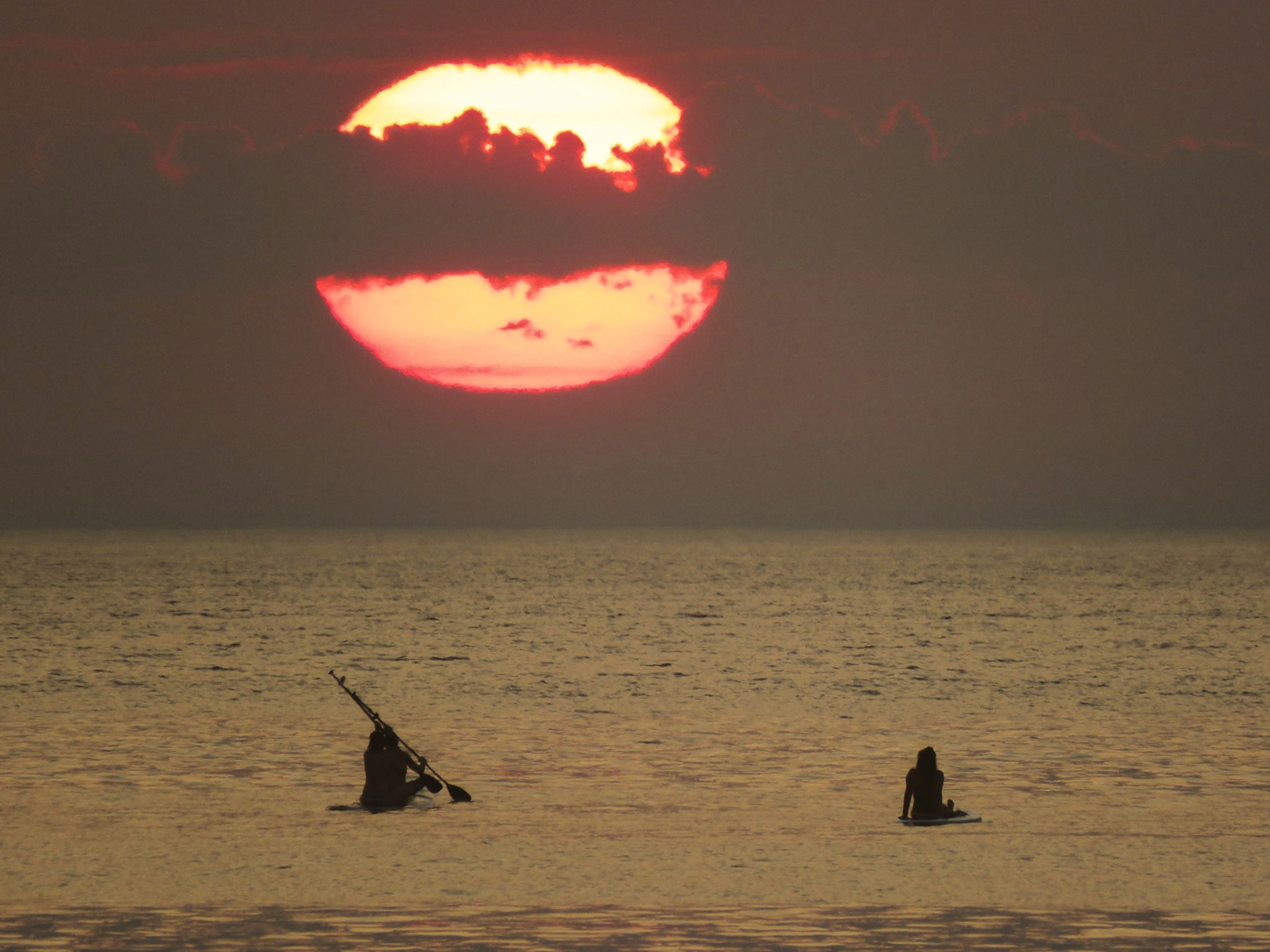
Tarifa offers the longest totality on the Spanish mainland, at four minutes and thirty-nine seconds, and the extraordinary backdrop of the Strait of Gibraltar with Africa visible across the water. The town itself is small and well-known to wind and kite surfers, which means its accommodation capacity is limited relative to the visitor volumes expected on eclipse day. Algeciras, fifteen minutes away, offers a more practical base with greater accommodation inventory and a similar totality duration.
The inland areas between Tarifa and the Sierra de Grazalema natural park place you closer to the centerline and away from the Atlantic marine layer that can produce morning cloud on the coast in August. For travelers willing to drive twenty to thirty minutes inland on eclipse morning, the cloud risk reduces significantly and the totality duration stays close to the maximum.
Insider tip: Tarifa is extremely popular and accommodation will sell out very early. If you want to be in or near Tarifa for eclipse day, book twelve to eighteen months in advance. Algeciras and the inland villages of the Campo de Gibraltar offer more flexibility and comparable totality durations.
Marbella and the western Costa del Sol
Marbella is the best-equipped luxury destination within the path of totality in Spain. It sits close enough to the centerline for over three minutes of totality, has a world-class hotel infrastructure, and benefits from the Alboran Sea's historically reliable August weather: cloud cover of around seven percent historically on 2 August, the lowest on the Spanish path. For travelers who want the eclipse alongside exceptional hotels, restaurants, and a fully operational resort destination, Marbella is the most coherent choice.
The stretch from Estepona west toward Gibraltar, including Sabinillas and Manilva, keeps you within a few seconds of the four-minute mark while being significantly less busy than Marbella itself. For travelers who want maximum totality duration with more breathing room, this stretch is worth considering.
Insider tip: Marbella's totality of just over three minutes is materially shorter than Tarifa or Tetouan but the infrastructure advantage is significant. If you are weighing a slightly shorter eclipse against a considerably more comfortable stay, Marbella resolves that question clearly in favour of the overall experience.
Cadiz
Cadiz is where the eclipse shadow first makes landfall in Spain, entering from the Atlantic and crossing the ancient sea walls of one of Europe's oldest continuously inhabited cities. The totality duration is just under three minutes, and the Atlantic coast location brings more cloud variability than the Mediterranean side of the path. But the setting, watching totality from the walls of a Phoenician city above the Atlantic with Africa visible across the water, is one of the most historically resonant viewing locations on the entire eclipse path.
Insider tip: Cloud cover at Cadiz runs higher than at Marbella historically, due to Atlantic marine layer. If you base yourself in Cadiz, have a contingency plan to drive thirty minutes inland toward Jerez or east toward the Sierra de Grazalema if the forecast shows coastal cloud on 1 August.

Inland Andalusia: the cloud-chaser's advantage
Satellite data shows inland areas of southern Spain averaging below fifteen percent cloud coverage in early August. The national parks of Sierra de Grazalema, Los Alcornocales, and Sierra de las Nieves all fall within or very close to the path of totality and offer dramatic natural settings for eclipse viewing away from the coastal crowds. For travelers building an Andalusia week that combines the eclipse with serious walking, wildlife, and the whitewashed villages of the interior, these parks offer a genuinely different experience from the coastal resort base.
Northern Morocco: the alternative destination
The path of totality crosses the northern tip of Morocco in roughly the same minute as it crosses Tarifa and the Strait of Gibraltar, with Tangier and Tetouan offering some of the longest totality durations available anywhere on the European and North African part of the path. Morocco is receiving considerably less attention than Spain in current eclipse planning conversations, which may prove to be a significant advantage for travelers who book early.
Tangier
Tangier is the most accessible Moroccan city for international travelers arriving via Spain, with ferry connections from Tarifa, Algeciras, and Malaga, as well as direct international flights. The centerline of the eclipse passes just south of the city, giving central Tangier four minutes and fifty-one seconds of totality. The city has undergone significant modernization in the last decade and now has a range of quality hotels that would have been unavailable to visitors a generation ago. The eclipse will occur with the sun rising over the Mediterranean and the African continent disappearing into four minutes and fifty seconds of darkness at midmorning.
Tetouan
Tetouan has the best totality duration of any easily accessible city on the Spain-Morocco section of the eclipse path, at four minutes and fifty-three seconds. It is forty minutes from Tangier by road and significantly less visited, which means both accommodation and access on eclipse day will be considerably easier to manage. The UNESCO-listed medina, built by Andalusian refugees who arrived from Spain in the fifteenth century, gives the city a visual and cultural character that is entirely distinct from Tangier and from anything available on the Spanish side of the Strait.
Chefchaouen
Chefchaouen sits at around sixty kilometers from the centerline, which gives it approximately four minutes and thirty seconds of totality, slightly less than Tangier and Tetouan but still extraordinary. The blue-painted mountain city is one of the most visually distinctive destinations in Morocco, and the combination of its cobalt alleyways, mountain setting, and a mid-morning totality descending on the medina is one of the most compelling single-experience propositions anywhere on the eclipse path. Tour operators running eclipse packages have already identified Chefchaouen as a signature destination for this reason.
Choosing between Spain and Morocco
The choice between Spain and Morocco is not primarily astronomical. The totality durations are comparable, the sky position is identical, and the historical cloud cover statistics are both favorable. The choice is about the kind of journey you want to build around the eclipse.
Spain offers the superior tourism infrastructure: more accommodation options at every quality level, easier international access, more flexible transport logistics on eclipse day, and the Andalusia travel experience that millions of visitors already know and love. For travelers who want the eclipse with maximum comfort and logistical control, Spain is the right choice.
Morocco offers something different: a genuinely extraordinary destination that most travelers will not have experienced, with the added distinction of watching totality from a UNESCO medina, a blue mountain city, or a viewpoint above the Strait of Gibraltar with Spain visible on the horizon. For travelers who want the eclipse to be the beginning of a Morocco discovery rather than the end of a Spain extension, Morocco is the more adventurous and, in some ways, the more rewarding choice.
The most considered option, and one that is entirely practical given the geography, is to combine both: a week in Andalusia leading up to the eclipse, a crossing to Morocco for eclipse day and two or three nights in the north, then a return to Spain or a flight home from Tangier or Casablanca. The Strait of Gibraltar is forty-five minutes by ferry. The two destinations are, for this event, genuinely complementary.
What to know before eclipse day: insider planning intelligence
Eclipse travel has matured significantly since the 2017 Great American Eclipse, and the lessons from that event and from subsequent eclipses are directly applicable to 2027. The following points reflect what experienced eclipse travelers and tour operators have learned from events where planning went wrong.
Road closures and access
This is the single most underestimated practical challenge of eclipse travel. At the 2026 eclipse in Mallorca, roads to many of the most popular free viewing spots were closed hours before totality, leaving travelers stranded in the wrong location with no way to move. Andalusia's road network is well developed, but the concentration of visitors in a narrow coastal strip on a single morning will create traffic conditions unlike anything the region normally experiences. Local authorities are likely to implement road management measures that are not yet publicized and that could significantly restrict access on the morning of 2 August.
Insider tip: Do not rely on being able to drive to your viewing location on eclipse morning. Either stay within walking distance of where you plan to watch, or build in a contingency that allows you to view from your hotel or accommodation if road access becomes impossible. A private driver who knows the local roads and can navigate around closures is worth the investment for eclipse day specifically.
Book now, not later
Quality accommodation in Marbella, Tarifa, Cadiz, and Tangier for the week of 28 July to 4 August 2027 is already selling. Properties that understand the eclipse market have been taking bookings since 2025. By the time most travelers begin planning in early 2027, the best options will be gone. This is not typical travel hyperbole: it is the pattern that every major eclipse has produced, including the 2026 Spain eclipse, whose best properties sold out within months of the date being confirmed.
Insider tip: Book accommodation for eclipse week immediately. If you are not ready to commit to a specific itinerary, book a refundable option at a quality property and refine the plan later. The accommodation you want will not be available in 2027 if you wait until 2027 to look for it.
Cloud contingency planning
The historical cloud statistics for Andalusia and northern Morocco in early August are excellent but not guaranteed. Marbella averages around seven percent cloud cover on 2 August historically. But historical averages do not help if your specific date is in the other ninety-three percent. A well-designed eclipse itinerary builds in mobility: the ability to drive thirty to sixty minutes on the morning of the eclipse to chase clearer sky if the forecast deteriorates. An operator locked into a single venue cannot pivot. A traveler with a car and a flexible mindset can.
Insider tip: Watch the weather forecast from 28 July onwards. By 1 August you will have a reliable five-day forecast for eclipse morning. If the Atlantic coast looks cloudy, moving inland to the Sierra de Grazalema or east along the Costa del Sol toward Marbella can make the difference between totality under cloud and totality under clear sky.
Eclipse glasses and eye safety
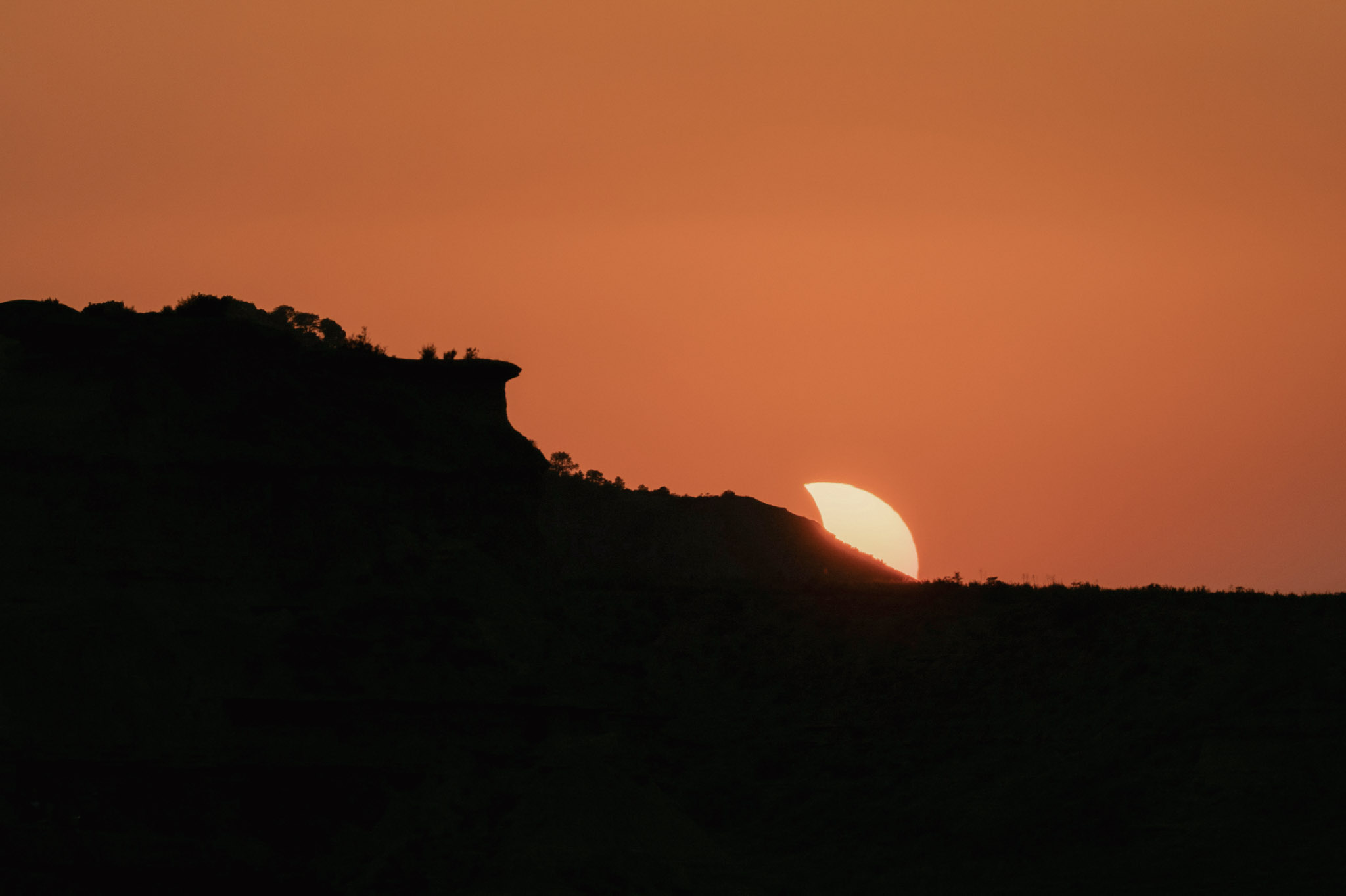
During the partial phases of the eclipse, which last approximately ninety minutes before and after totality, looking at the sun without certified protection will cause permanent eye damage. Standard sunglasses, smoked glass, and phone cameras do not provide protection. Only ISO 12312-2 certified eclipse glasses are safe for the partial phases. During totality itself, it is safe to look with the naked eye. The transition between partial and total is the moment that catches people out: removing eclipse glasses too early or putting them back on too late. A guide or an eclipse timer app makes this transition clear.
The partial eclipse is not the eclipse
The most important thing to understand about eclipse planning is that the partial phase and the total phase are entirely different experiences. The partial eclipse, during which the moon progressively covers the sun over ninety minutes, is interesting but not extraordinary. Totality, the two to five minutes of complete coverage, is one of the most arresting experiences in nature. Travelers who watch the partial phase from a convenient location and then duck inside before totality, or who watch the whole thing through eclipse glasses without removing them for totality, miss the entire point. Be outside, be ready, and have your eclipse glasses off the moment totality begins.
How to start planning now
The most important actions to take today, twelve months before the eclipse, are the ones that are hardest to take once you have waited. Accommodation in the quality tier that Adler Marlow's travelers expect is already limited. Private guide availability for eclipse day is already being booked. Itineraries that combine Andalusia and Morocco around the eclipse date are already filling.
Our cluster articles cover each destination and planning question in depth: a location-by-location guide to Andalusia, a deep-dive into northern Morocco, a dedicated insider tips article on eclipse day logistics, and sample itineraries for both a Spain-only and a Spain-Morocco combined journey. Each one builds on the framework in this pillar with the specific detail needed to make a booking decision.
For travelers who are ready to start designing now, this is the year when starting early is not just sensible but necessary.
FAQs
What is the eclipse of the century?
The 2027 total solar eclipse is the longest total solar eclipse visible from land between 1991 and 2114. At its maximum, near Luxor in Egypt, totality lasts six minutes and twenty-two seconds. On the Spain and Morocco section of the path, totality lasts between two and five minutes depending on location, which is still significantly longer than most total solar eclipses that cross populated areas.
Where in Spain will the 2027 eclipse be total?
What time does the 2027 eclipse happen in Spain?
What time does the 2027 eclipse happen in Morocco?
Do you need a sea view or a high vantage point to watch the eclipse?
How far in advance should I book?

Start planning your 2027 eclipse journey
Quality accommodation for eclipse week is already selling. Contact us now to discuss how we design eclipse journeys in Andalusia and northern Morocco, with the local intelligence, private access, and contingency planning that makes the difference on 2 August.
Latest posts

The 2030 World Cup is coming to Spain, Portugal, and Morocco
In 2030 the World Cup comes to Spain, Portugal, and Morocco. Our travel coordinator Pedro Contreras Gonzalez, who has spent over twenty years in hospitality across Spain and the UK, on what has been confirmed, what has not, and what it means for anyone thinking about being there.
Read more

How to design a week in northern Morocco around the 2027 solar eclipse
A week in northern Morocco built around the 2027 solar eclipse combines Tangier, the blue city of Chefchaouen, and Tetouan's UNESCO medina for eclipse day, where four minutes and fifty-three seconds of totality will descend on one of the most culturally extraordinary cities in North Africa.
Read more

How to design a week in Andalusia around the 2027 solar eclipse
A week in Andalusia built around the 2027 solar eclipse covers Seville, Ronda, the Sierra de Grazalema, and Marbella for eclipse day, with enough time to experience one of the great destinations in southern Europe alongside one of the most extraordinary astronomical events of a lifetime.
Read more