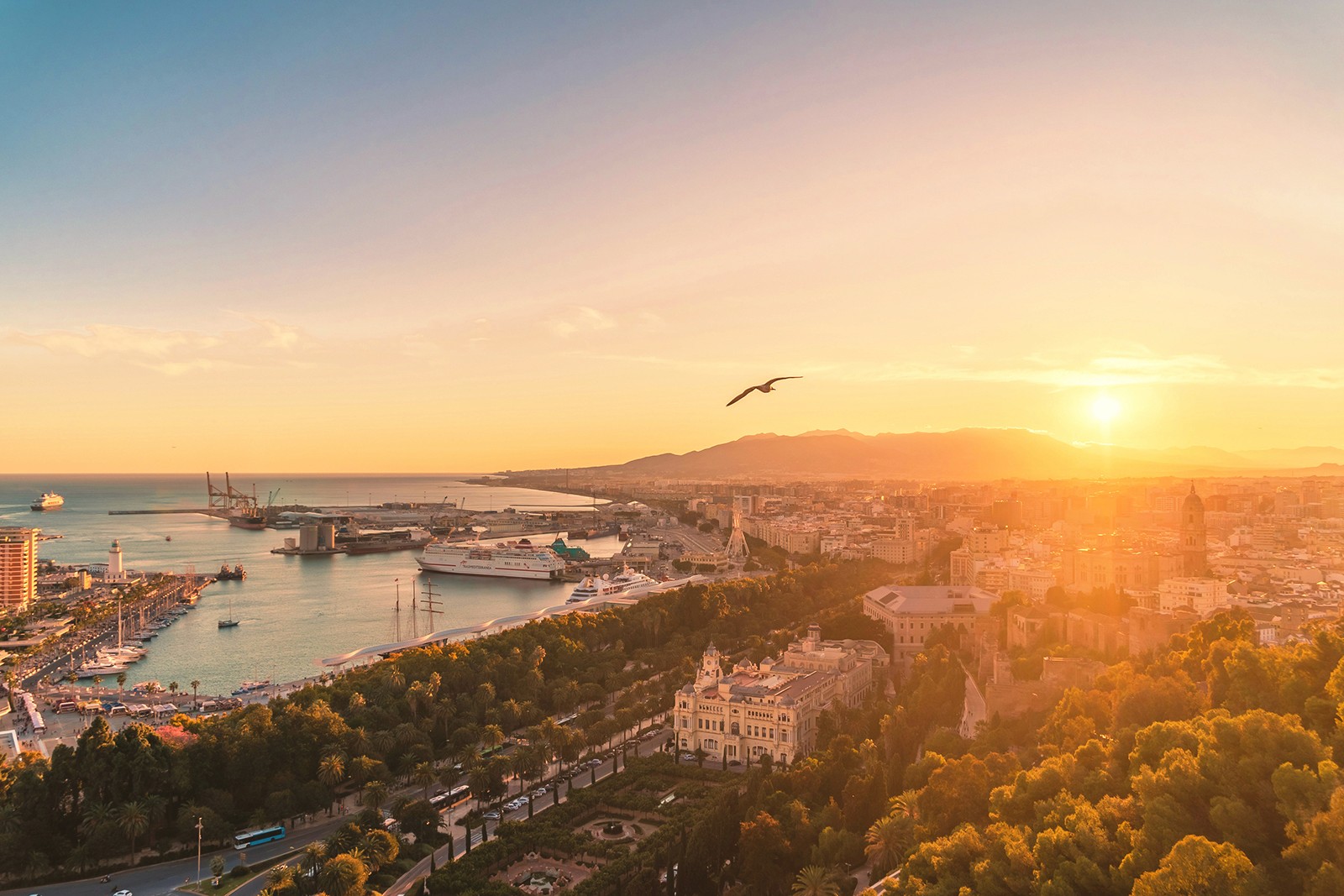
Costa del Sol Michelin Restaurants and Chiringuitos
Why the Coast Deserves Serious Food Travelers. Discover Costa del Sol dining beyond hotels: Michelin-star restaurants in Málaga and Marbella, plus chiringuitos and espetos worth planning around.
By Hanni Martini, Managing Director | Feb. 24, 2026
For years, the Costa del Sol has been easy to dismiss. It has long been associated with sunshine, polished hotels, and a predictable dining loop. If you only eat where convenience points you, that reputation holds.
But if you plan with intention, the coast tells a different story. In Málaga and Marbella, Michelin-starred chefs are cooking with precision and a distinctly Andalusian point of view. On the sand, chiringuitos are still doing something that fine dining cannot replicate: buying close to the water, cooking simply, and getting the timing right. On this coastline, those two worlds compete for the same thing, your appetite and your trust.
The result is a destination that can satisfy serious food travelers without turning the trip into a relentless restaurant marathon.
The Costa del Sol’s real culinary story: technique on the sand, ambition in the dining room
What makes the Costa del Sol interesting is not that it has “good restaurants.” Many places do.
It is the coexistence of two standards of excellence.
One standard is Michelin: tightly controlled rooms, choreography, a tasting menu that shows ideas as much as ingredients. You see it in Marbella at Skina (two stars), Messina (one star), BACK (one star), and Nintai (one star).
The other standard is the chiringuito: open-air kitchens whose credibility depends on product quality, fire management, and restraint. A great chiringuito does not need foam or tweezers. It needs fresh fish, hot oil, a clean grill, and someone who knows when a sardine is done.
On this coast, the two standards are not separate categories. They are in conversation.
What a “chiringuito” really is on this coast
A chiringuito is, at its simplest, a beach bar or beachside restaurant. In Spain, it traditionally refers to casual seaside setups that serve drinks and food next to the sand, often seasonal in spirit even when they operate year-round.
Along the Costa del Sol, that definition has expanded. Some chiringuitos remain wonderfully direct. Others have evolved into sophisticated beachfront restaurants with deep wine lists and serious seafood sourcing. Michelin itself describes La Milla as a former chiringuito updated into a stylish beachfront restaurant focused on high-quality fish and seafood.
Espeto culture and what to look for
If you care about coastal Málaga, you care about espetos. The espeto is a local tradition of skewering sardines and grilling them over coals, often in open air near the beach. It is simple, but it is not casual. The technique and the freshness are the difference between average and memorable.
When you order espetos, you are not looking for complexity. You are looking for control. Even salting, properly managed heat, and fish cooked so the skin protects the flesh while the interior stays juicy.
The modern chiringuito: where craft meets comfort
The chiringuito has become a proving ground. In some places, it is where great seafood kitchens compete as seriously as dining rooms do, just with different tools. Fire, oil, and timing replace tasting-menu structure.
That is exactly why a food-focused Costa del Sol itinerary should include both.
Michelin on the Costa del Sol: small rooms, big intention
Michelin-star dining on the coast is not confined to one town. It clusters around two main bases, Marbella and Málaga, with a standout in Fuengirola.
Marbella’s Michelin addresses: Skina, Messina, BACK, Nintai
Marbella’s Michelin scene is compact, and that is useful. You can dine at an ambitious level without spending your day in transit.
Skina (Marbella, two stars)
One of the coast’s most influential rooms, with Michelin listing it as a two-star restaurant.
Messina (Marbella, one star)
Holds one star and is known, in Michelin’s description, for a technique-driven approach that emphasizes clarity of flavor.
BACK (Marbella, one star)
One star and sits well for travelers who want modern Andalusian cooking without a hushed tone.
Nintai (Marbella, one star)
Adds a Japanese counterpoint, with Michelin listing it as one star.
Málaga’s Michelin addresses: José Carlos García, Kaleja, Palodú, Blossom
Málaga city is the anchor for travelers who want culture, markets, and a strong dining lineup in one walkable base.
José Carlos García (Málaga, one star)
Listed by Michelin as a one-star restaurant, located at Muelle Uno by the port.
Kaleja (Málaga, one star)
One star listed in Michelin’s Málaga selection.
Palodú (Málaga, one star)
One star and sits near Atarazanas Market, which makes it easy to pair market time with a serious meal.
Blossom (Málaga, one star)
Listed as one star by Michelin.
Fuengirola’s outlier: Sollo and why the Green Star matters
Sollo (Fuengirola) is the outlier that signals how far the Costa del Sol has moved beyond a resort-only narrative. It holds a MICHELIN Star, and it is also awarded the MICHELIN Green Star, which recognizes restaurants that pair high-level cooking with meaningful sustainability practices.
That matters because Green Stars are still relatively scarce in Spain in overall terms. The MICHELIN Guide’s Spain 2025 overview lists 57 Green Star restaurants nationally.
At Sollo, sustainability is not framed as a side note. The restaurant describes a circular approach centered on aquaponic production and self-sufficiency, which shapes the menu as directly as technique does.
How Michelin and chiringuitos compete, and why that is good for travelers
Ingredient standards and supply chains
Michelin kitchens compete through technique and concept, but they also rely on pristine supply. Chiringuitos compete more bluntly. If the fish is not excellent, there is nowhere to hide. That pressure is part of why the best chiringuitos feel so confident.
Service style and timing
Michelin dinners require attention, time, and a willingness to settle in. Chiringuitos reward spontaneity, sunlight, and appetite.
A well-designed itinerary uses both. It makes lunch the place where you taste the coast directly, then uses dinner for precision, story, and range.
Value and expectations
If your trip includes only Michelin, you miss the coastline’s most specific culinary language. If it includes only chiringuitos, you miss the level of ambition that has quietly arrived in Málaga and Marbella.
Together, they build a complete picture.
A practical way to do both well: bases, pacing, and reservations
The key to doing this well is not a longer list of restaurants. It is a workable rhythm.
Base in Málaga
If you want market culture, museums, and evenings that are easy to keep local, Málaga should be your base. It also puts you close to El Palo and other areas where chiringuito culture is part of daily life.
Base in Marbella
If you want a tighter concentration of Michelin addresses plus polished beachfront dining, Marbella would work best as a base.
Split the stay
If you want both without long drives at night. Two nights Málaga, two nights Marbella is often enough for a food-forward trip. A 3 to 5 day framework that works, would be as follows:
Lunch on the sand, dinner in the city
Use chiringuitos for lunch when seafood is at its best and you can enjoy the coastline in daylight. Save Michelin for evenings when you can commit to a full experience.
Alternate intensity
A long tasting menu is better when it is not stacked on top of another long tasting menu. A beach lunch between Michelin dinners is not a downgrade. It is palate balance.
Book Michelin early
Michelin-star rooms on the coast can be small, and peak-season demand is real.
Keep one flexible lunch
That is where you follow weather, appetite, and local recommendations.
Weather and seasonality notes
The Costa del Sol can be generous outside of high summer. Spring and early fall often give you the best mix: warm daylight for chiringuitos and comfortable nights for long dinners.
If a day turns windy or cooler than expected, use that as your cue for Málaga city dining, markets, and a more structured dinner.
Where your named chiringuitos fit
These are not interchangeable. Each delivers a different expression of the coast.
El Tintero (Málaga)
El Tintero is famous for its “subasta” service: waiters move through the space calling out dishes, and the first table to signal takes the plate. The restaurant itself explains this auction-style flow clearly.
For travelers, it is not just dinner. It is an operating system. Go with a sense of humor, order what looks best as it passes, and let the meal become a social experience.
Chiringuito Los Sardinales (Marbella area)
Los Sardinales sits on the Marbella coastline and leans into classic Mediterranean seafood. It is a strong choice when you want a straightforward beach lunch that still feels cared for.
La Milla (Marbella)
La Milla is often the easiest bridge between the two worlds. Michelin describes it as a former chiringuito modernized into a stylish beachfront restaurant centered on high-quality fish and seafood.
This is where you go when someone in your group wants “a beach place,” but you still want food standards that hold up.
Oasis (Fuengirola)
Oasis is a practical stop for a classic seafood lunch in Fuengirola, including the kind of espeto experience many travelers come to Málaga province hoping to find. Reviews frequently call out espetos specifically.
It pairs naturally with a Fuengirola day that includes Sollo at night, if you want to contrast tradition at lunch with contemporary ambition at dinner.
A food-focused Costa del Sol itinerary works best when it is designed around rhythm, not hype. Put technique on the sand and ambition in the dining room, then connect them with smart bases and realistic pacing. That is how the coast stops being “just nice hotels” and starts reading like a serious culinary destination.
FAQs
Is the Costa del Sol worth it for serious food travelers?
Yes, if you plan beyond convenience. The coast now supports Michelin-star dining in Marbella and Málaga, and it still delivers chiringuito culture that is specific to Málaga province, especially espeto tradition.
Should I stay in Málaga or Marbella for a food trip?
How do I balance tasting menus with chiringuitos without feeling overbooked?
What is the MICHELIN Green Star?
What is the difference between a good chiringuito and a forgettable one?
Do I need reservations?
Plan Your Foodie Journey
Interested in Spain’s Restaurant Scene? Contact us for recommendations and trip design.
Latest posts

The 2030 World Cup is coming to Spain, Portugal, and Morocco
In 2030 the World Cup comes to Spain, Portugal, and Morocco. Our travel coordinator Pedro Contreras Gonzalez, who has spent over twenty years in hospitality across Spain and the UK, on what has been confirmed, what has not, and what it means for anyone thinking about being there.
Read more

How to design a week in northern Morocco around the 2027 solar eclipse
A week in northern Morocco built around the 2027 solar eclipse combines Tangier, the blue city of Chefchaouen, and Tetouan's UNESCO medina for eclipse day, where four minutes and fifty-three seconds of totality will descend on one of the most culturally extraordinary cities in North Africa.
Read more

How to design a week in Andalusia around the 2027 solar eclipse
A week in Andalusia built around the 2027 solar eclipse covers Seville, Ronda, the Sierra de Grazalema, and Marbella for eclipse day, with enough time to experience one of the great destinations in southern Europe alongside one of the most extraordinary astronomical events of a lifetime.
Read more